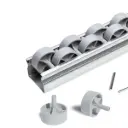
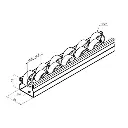
Twin-wheel roller track
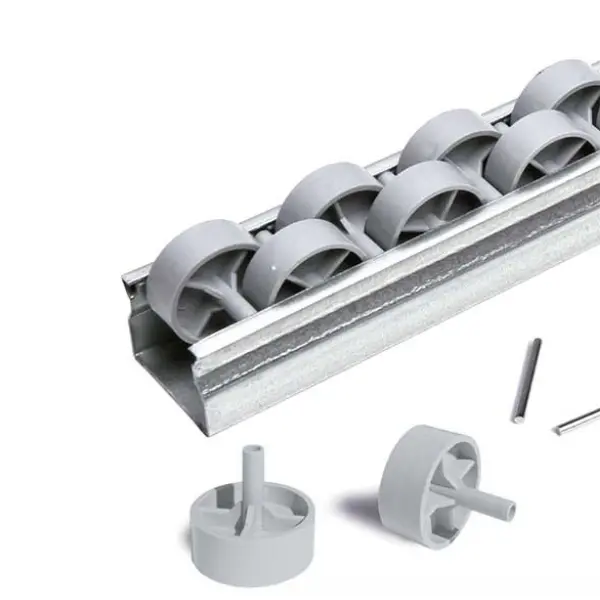
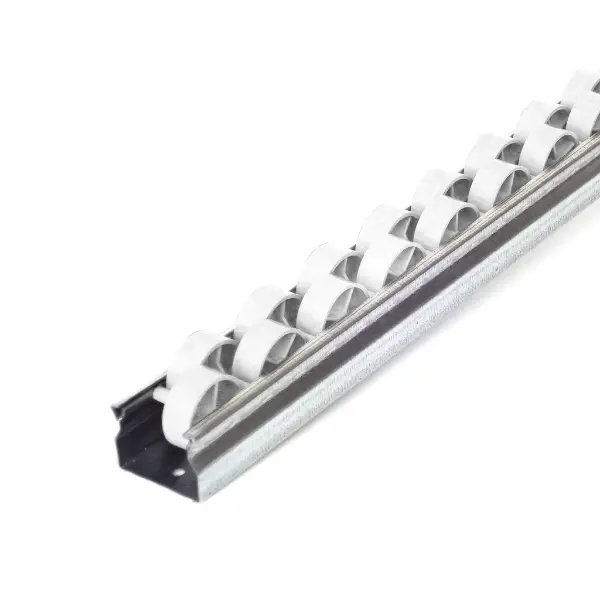
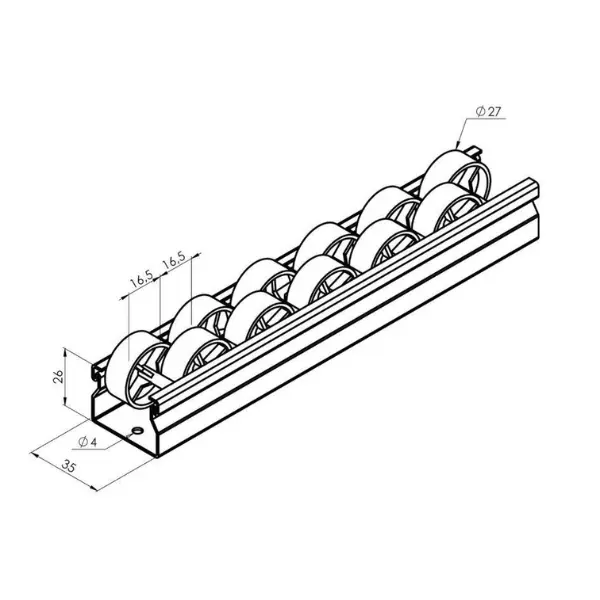
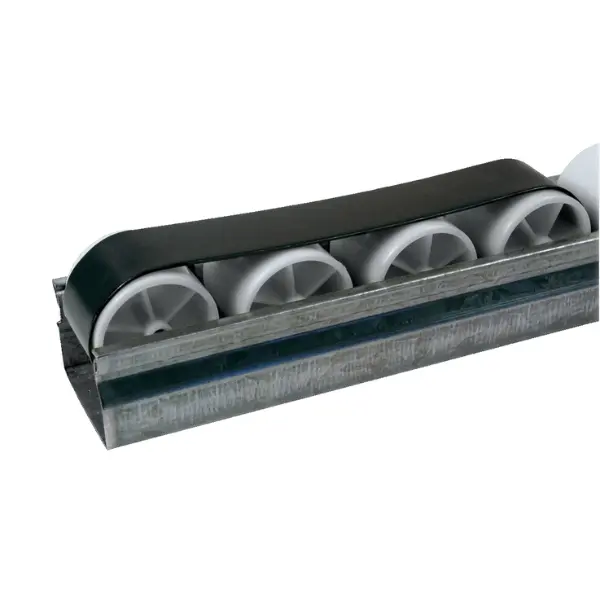
Twin-wheel roller track for gravity roller tracks on Green Frame Ø 28 mm structures: two wheels per position for stable guidance of containers and trays. 4000 mm bar cut to length, standard or ESD.
Green Frame · Gravity roller tracks
Twin-wheel roller track – gravity roller track for containers and trays
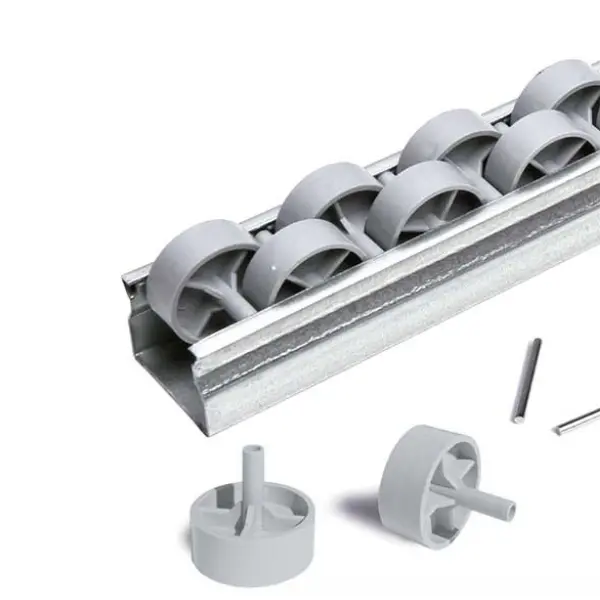
The roller track with two wheels per position: the bottom of the container rests on more points and runs down more steadily. For trays, crates and containers on flow racks and FIFO shelving, in standard or ESD version, in 4000 mm bars that we cut to length.
Why choose it
More support points
Two wheels per position: the bottom of the container is better supported.
Stable running
Trays and crates run down straight, with less wobbling.
ESD too
ESD version for EPA areas.
Made to measure
4000 mm bar cut to the lane depth.
Choose it if…
- You move trays or containers that you want to guide more steadily.
- The bottom of the containers needs more support points.
- You need a twin-wheel roller track, also in ESD version.
Choose another solution if…
- You need the basic version, also coloured or ESD: Roller track →
- You want a side edge that guides the container: Roller track with edge →
- You have heavy containers: HD roller track →
Not sure which one to choose? Use the Green Frame quick guide →
What you need to complete the lane
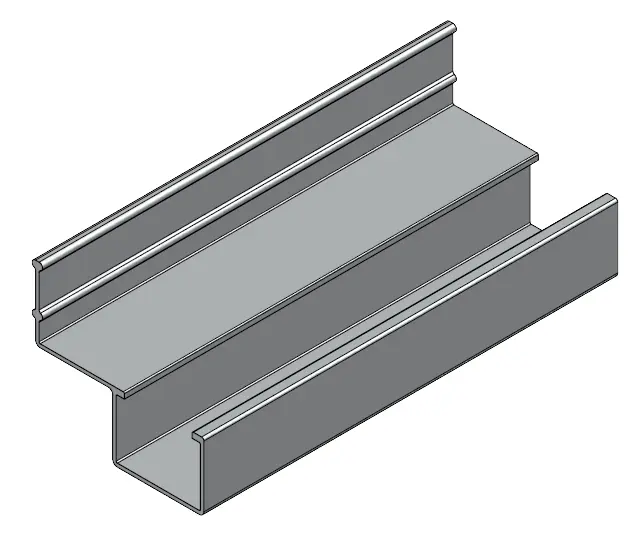
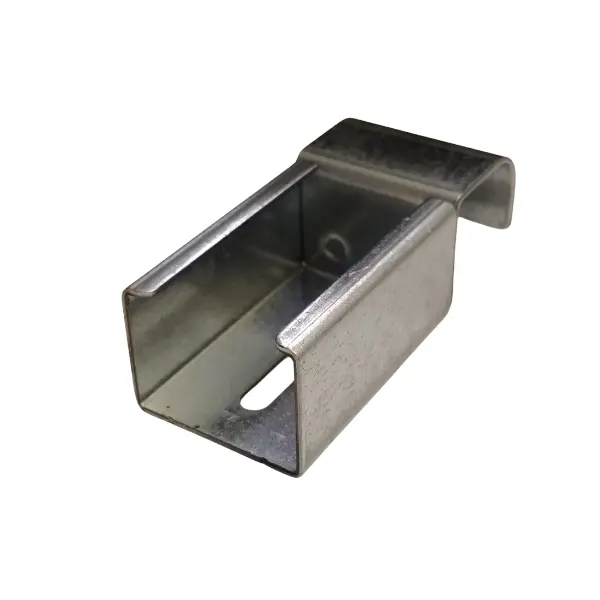
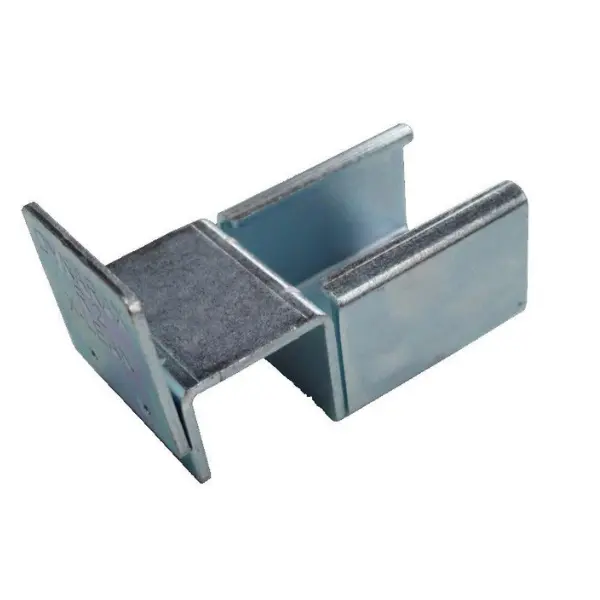
End-of-lane stop
Holds the container on the picking side; available in high and low versions.
View product →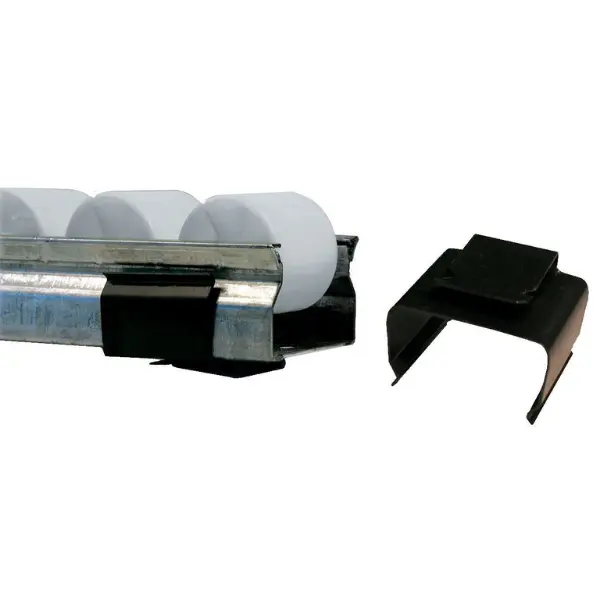
The quantity and position of hooks, clips and guides depend on lanes and containers: we specify them in the component list.
Flow control and identification
Roller track brake
Slows down descending containers where the lane is long or the load heavy.
View product →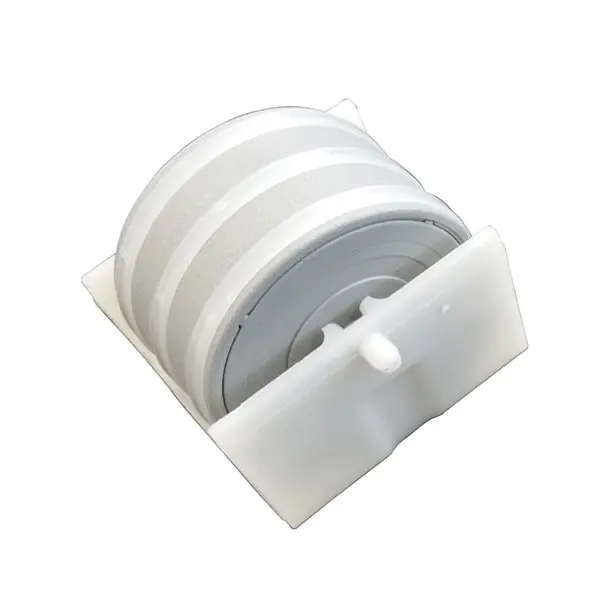
Brakes and friction rollers are chosen according to container weight and slope: we size them with you.
How a roller track lane is assembled
The typical layout of a gravity level on a Green Frame structure:
Inclined frame
The Ø 28 cross pipes carrying the roller track are higher on the loading side and lower on the picking side; you adjust the slope with rotating connectors.
View product →Hooks at the head and tail
The roller track hooks onto the cross pipes with roller track hooks; clips fix it to the pipe.
View product →Stop at the tail
On the picking side the stop, high or low, holds the container in the picking position.
View product →For long lanes, an intermediate support pipe is added under the roller track: we define its position on the project.
The LeanProducts service
From sketch to ready-to-use gravity rack:
FIFO rack design
We start from containers, quantity per lane and space: we define lanes, slope, number of roller tracks and supports, with the load calculation for the structure.
Cut to length
In our workshop we cut Green Frame pipes, roller tracks and guides to the required length.
Kit or assembled flow rack
We deliver the gravity rack assembled or as a kit, with the parts cut and the component list.
Modifications and spare parts
When containers or codes change, we add lanes, move levels and supply spare parts.
Send us a sketch or the dimensions of the rack and containers: we will propose the configuration with the list of codes.
Data and compatibility
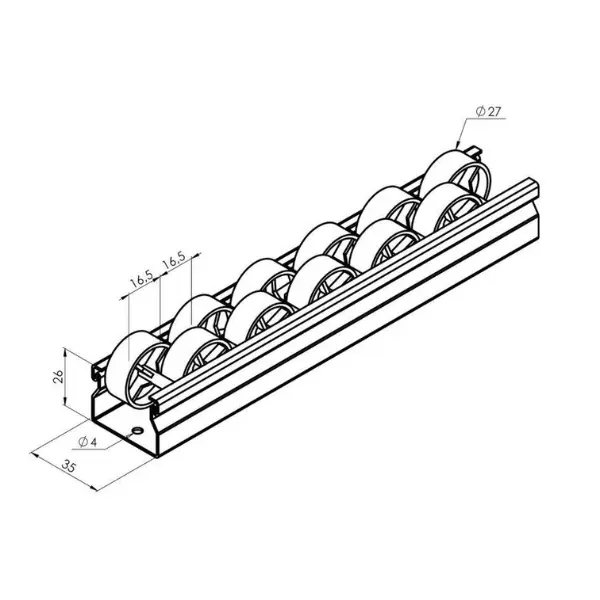
| Specification | Value |
|---|---|
| Codes and versions | GF28-RD standard; GF28-RDESD ESD |
| Length | 4000 mm bar or cut to length |
| Feature | Two wheels per position |
| Mounting | On Ø 28 mm pipe frame (Green Frame GF-N), with roller track hooks and clips |
| Accessories | Side and centre guides, hooks, high and low stops, clips, brakes, friction roller, anti-return |
| Capacity | Depends on supports, slope and number of tracks per lane: we calculate it on the project |
Load capacity and slope depend on containers, number of tracks per lane and distance between supports: we size them with you on the project.
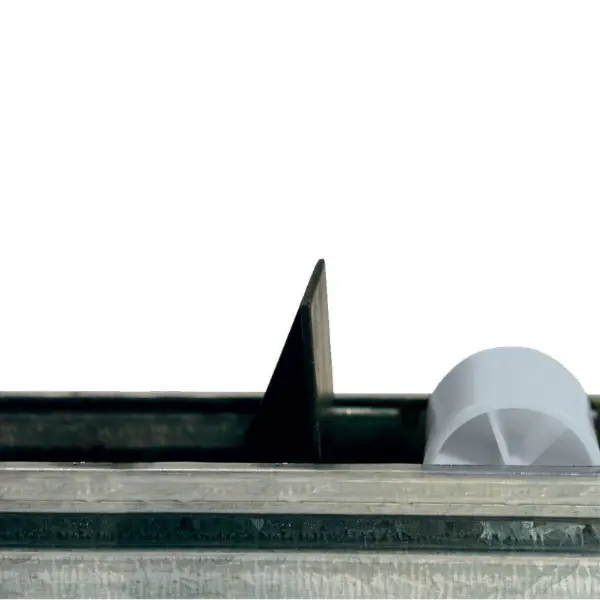
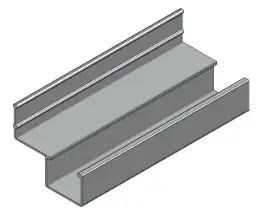 Aluminium side guideAluminium side guide
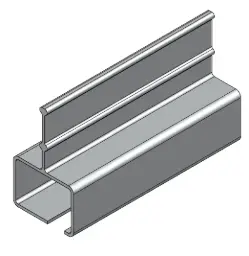 Aluminium centre guideAluminium centre guide
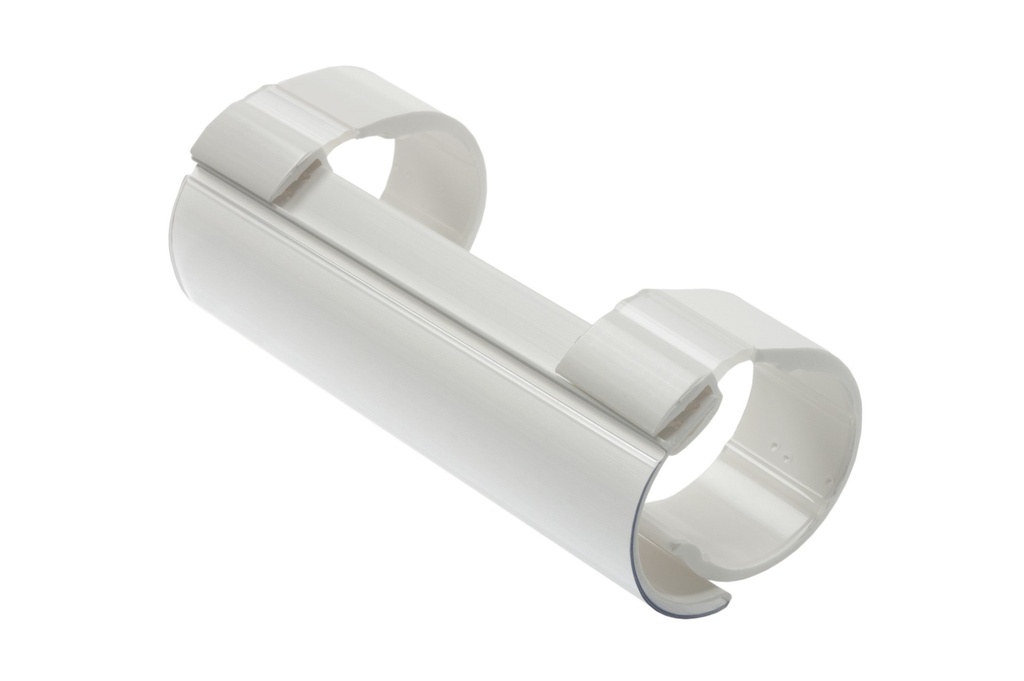
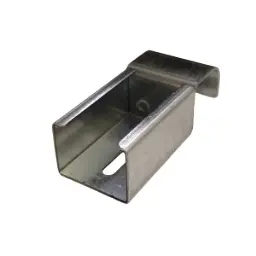 Roller track hookRoller track hook
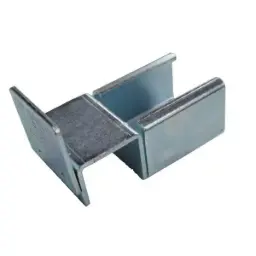 High stop hook for roller tracksEnd-of-lane stop, high
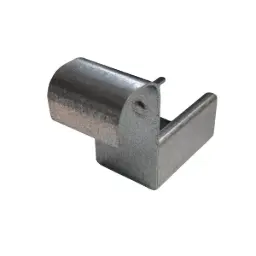 Low stop hook for roller tracksEnd-of-lane stop, low
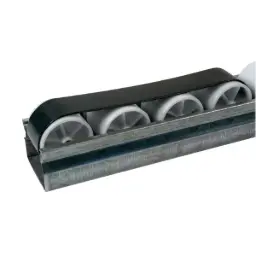 Roller track brakeRoller track brake
Designing a gravity rack?
Send us the dimensions and weight of the containers and how many lanes you need: we will specify roller tracks, hooks, guides and accessories, with the cutting lengths.