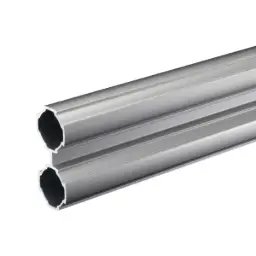
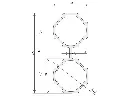
GF-N W profile
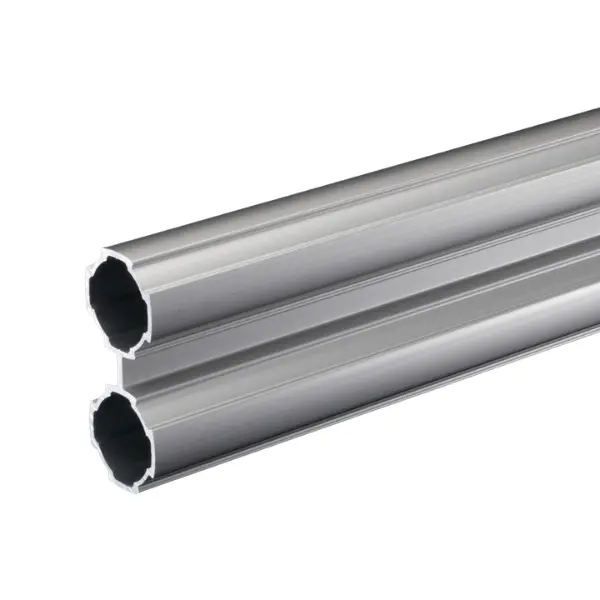
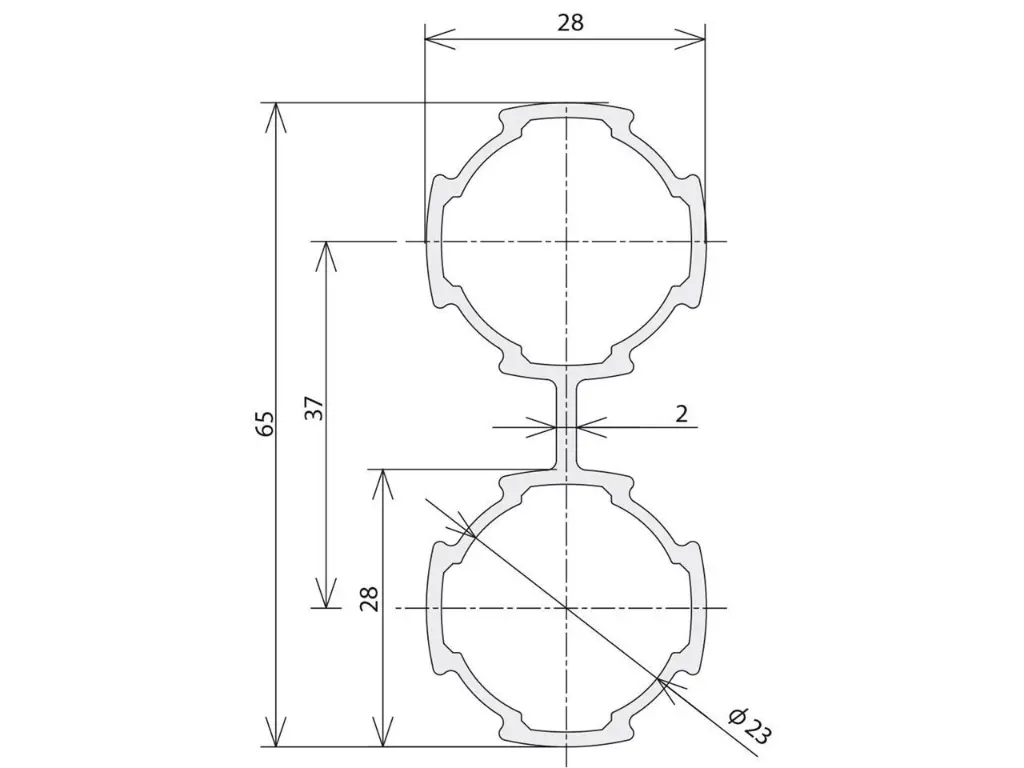
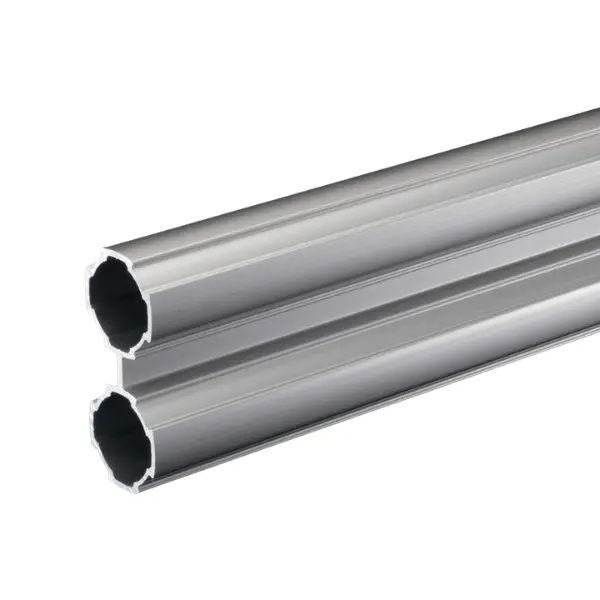
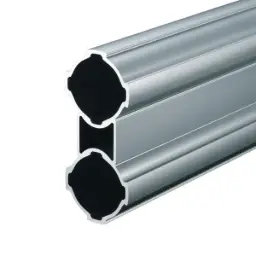
Green Frame twin Ø 28 mm pipe profile, 65 × 28 mm: mounted upright it is about 10 times stiffer than GF-N. For long cross members and loaded shelves. 0.79 kg/m, 4000 mm bar or cut to length.
Green Frame · GF-N Ø 28 profiles
GF-N W profile: twin Ø 28 mm pipe for long cross members and loaded shelves
Two Ø 28 mm pipes joined into a single 65 mm high profile. Mounted upright it has about 10 times the bending resistance of the GF-N pipe: it is the right cross member for loaded worktops, shelving with long spans and trolley bases. It weighs 0.79 kg/m and connects with its dedicated outer connector.
Why choose it
Ten pipes in one
Upright it has about 10 times the bending resistance of the standard pipe, for little more than twice the weight.
Longer spans
Over a 1000 mm span it takes about 1950 N at mid-span with 5 mm of deflection: loaded shelves without intermediate supports.
Dedicated connector
The W outer connector holds 1000 N against slipping and 50 N·m vertically.
Stays within the 28 system
The two pipes accept 28 series end caps and GF-N inner connectors.
Choose it if…
- The cross member is long or has to carry a loaded shelf.
- You want to avoid intermediate uprights or supports.
- You are building trolley bases, workbenches or shelving for high loads while staying within the Ø 28 system.
Choose another solution if…
- Light reinforcement is enough, without changing footprint: Reinforced GF-N T profile →
- You need even sturdier cross members, in the Ø 43 series: GF-G W profile →
- The cross member is short and lightly loaded: GF-N profile →
Not sure which one to choose? Use the Green Frame quick guide →
Application example
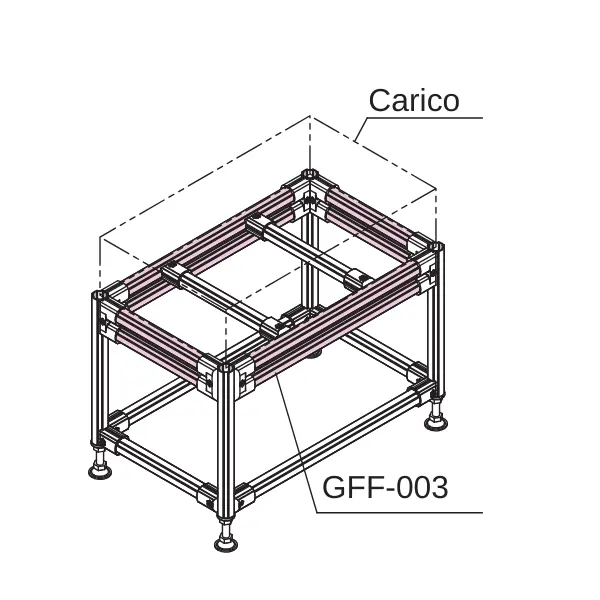
The W is used as a cross member where a single pipe would bend too much:
- Loaded worktops on workbenches and workstations
- Shelving levels with long spans
- Trolley bases for heavy loads
How it connects
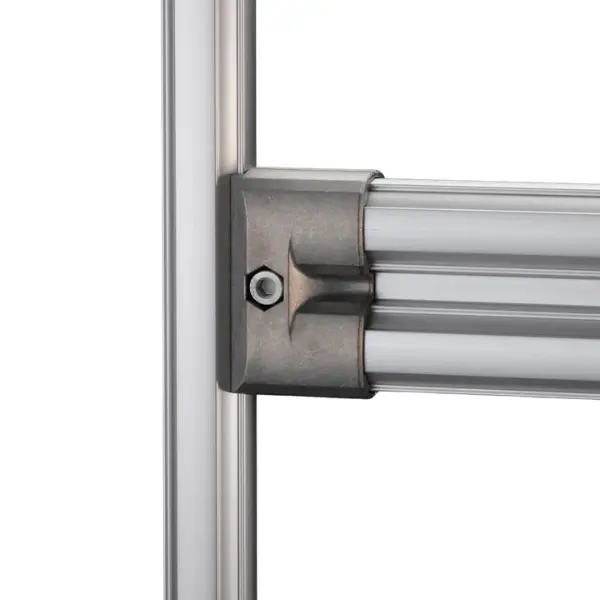
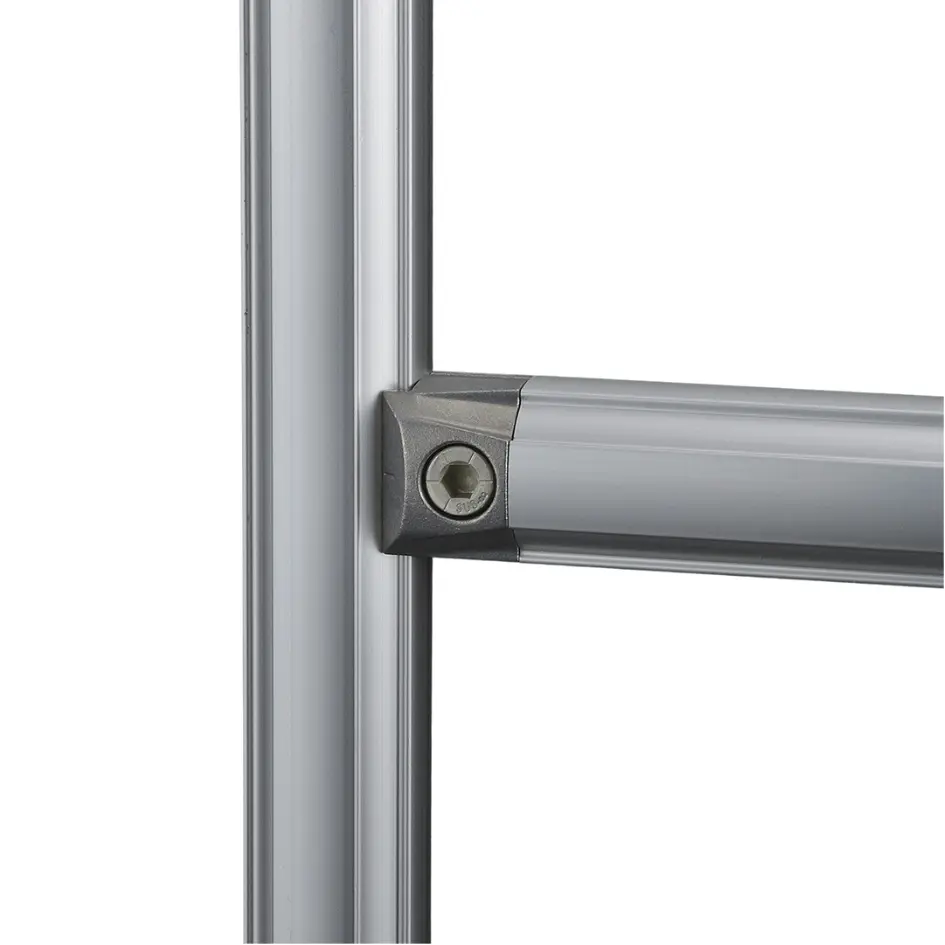
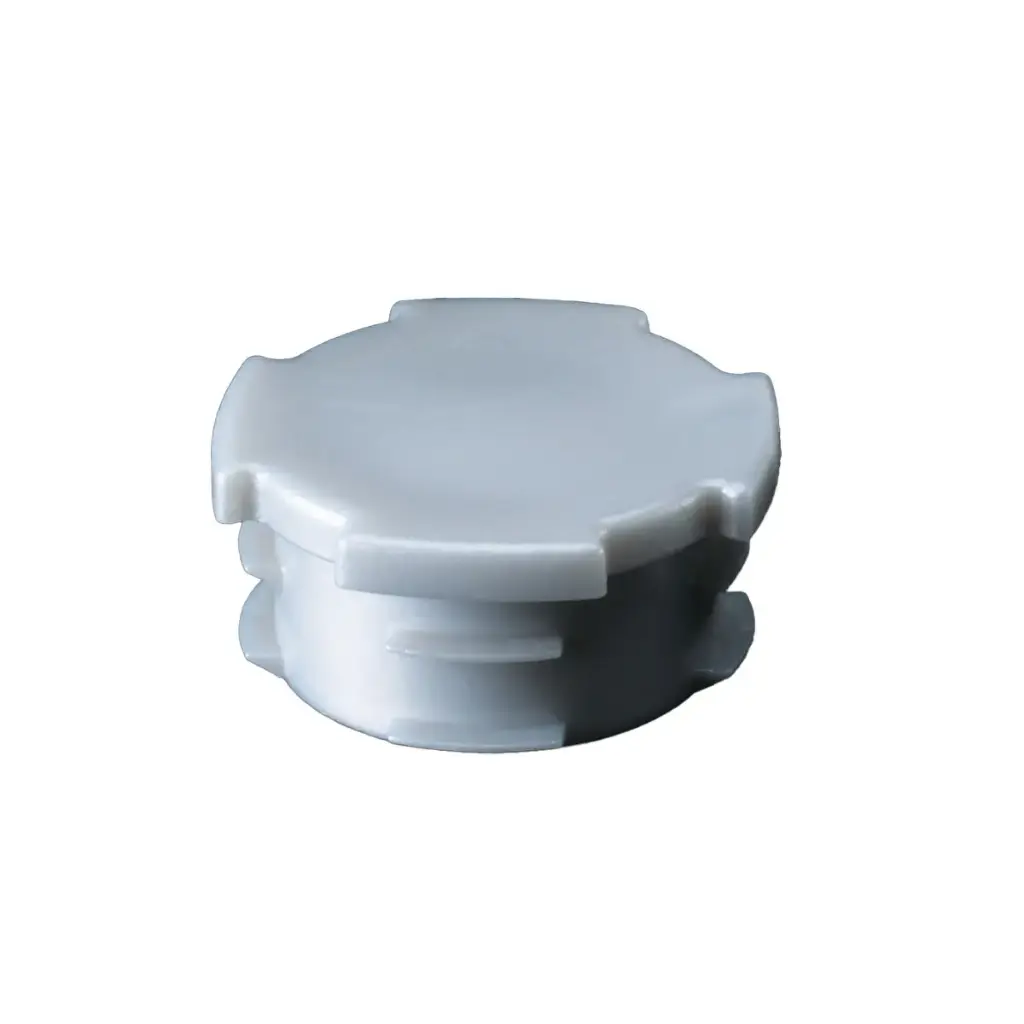
Always mount it upright, with one pipe above the other: flat it gives only twice a single pipe.
Upright or flat
Orientation changes everything:
Upright
One pipe above the other: over a 1000 mm span it takes about 1950 N at mid-span with 5 mm of deflection.
Flat
The two pipes side by side: over 1000 mm it takes 388 N at mid-span, about twice a single pipe.
Joints
At maximum load each end transfers about 1000 N: use the W outer connector, which holds 1000 N against slipping.
With loads like these the weak points become the joints and feet: we carry out the full structural check.
The LeanProducts service
From drawing to finished structure, with a single point of contact:
Design and load calculation
We start from your sketch or dimensions: we choose profiles and connectors and check spans, joints and loads.
Cut to length
We cut the profiles in our workshop to the lengths in the design, ready to assemble.
Kit or assembled structure
You receive the kit with the cut parts and the list of components, or the structure already assembled.
Spare parts and modifications
When the process changes we supply components and new cuts to modify or extend the structure.
Send us a sketch, a photo or the overall dimensions: we will reply with codes, quantities and cut lengths.
Technical data
| Specification | Value |
|---|---|
| Code | GFF-003 |
| Series | GF-N, Ø 28 mm |
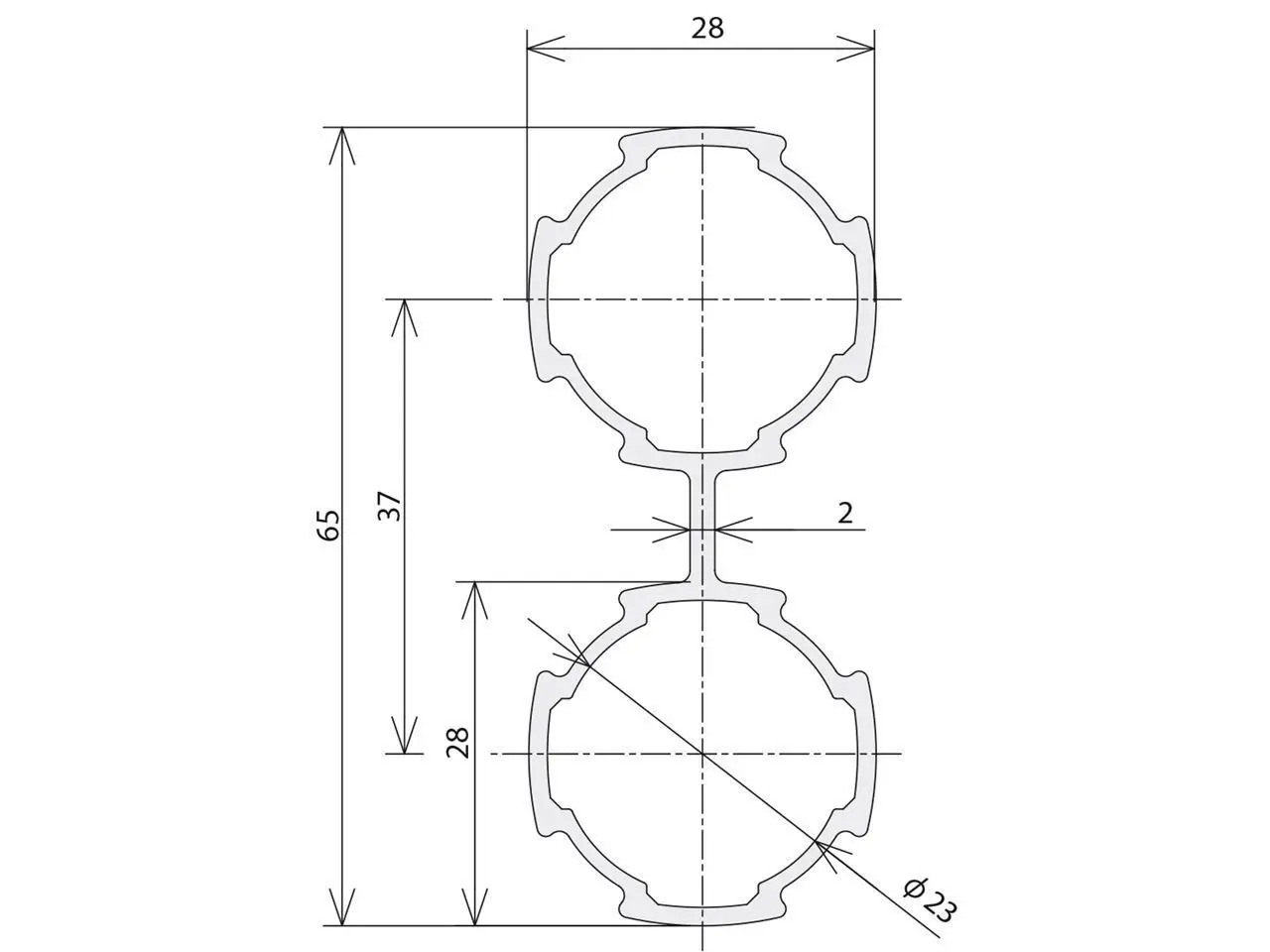
| Cross-section | 65 × 28 mm: two Ø 28 pipes at 37 mm centres |
| Length | 4000 mm bar or cut to length |
| Weight | 0.79 kg/m |
| Material and finish | Anodised extruded aluminium |
| Moment of inertia | Ix = 11.66 × 10⁴ mm⁴ (upright) · Iy = 2.31 × 10⁴ mm⁴ |
| Section modulus | Zx = 3.59 × 10³ mm³ · Zy = 1.65 × 10³ mm³ |
| Load at mid-span, 1000 mm span, upright | about 1950 N (about 200 kg) with deflection 5/1000 |
| Load at mid-span, 1000 mm span, flat | 388 N (about 40 kg) with deflection 5/1000 |
| Suitable connectors | W outer connector GFJ-D28 (1000 N against slipping); GF-N inner connectors |
| End caps | Standard inner end cap GFA-400; alternatively aluminium GFA-E17, expanding GFA-C83, rounded GFA-404, ESD GFA-411 |
Loads concentrated at the centre of a pipe fixed at both ends with connectors, span measured between the uprights: in a structure, joints and supports also count, and we carry out the full check on the design.
 Outer 90° connector for GF-N W profile90° outer connector for W
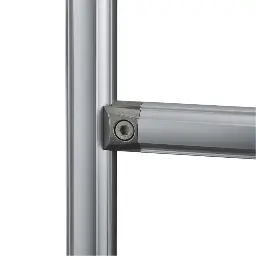 Inner 90° connector GF-NInner 90° connector
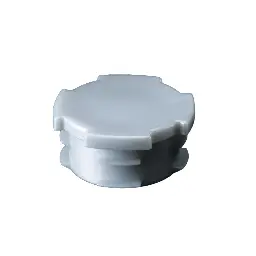 GF-N inner end capStandard inner end cap
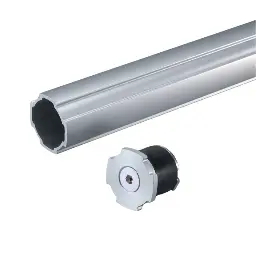 GF-N aluminium expanding end capExpanding end cap
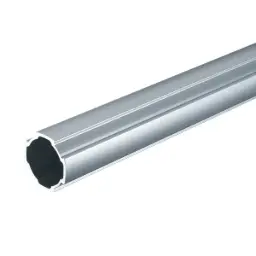 GF-N profileStandard GF-N profile
 GF-G W profileGF-G W profile, even stiffer
Not sure which profile to use?
Send us a sketch of the structure and the weight it has to support: we will tell you the profiles, connectors and cut lengths.