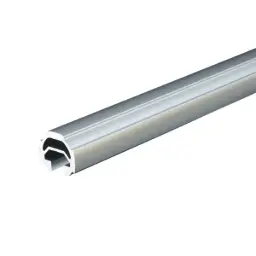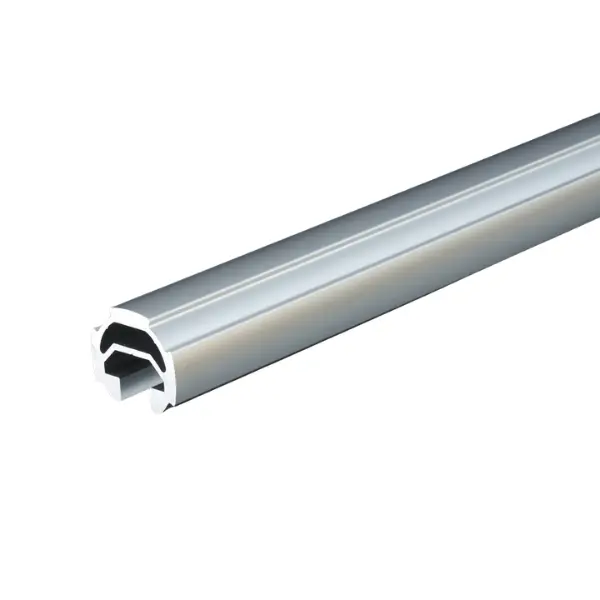
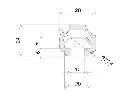
GF-N profile with C10 slot
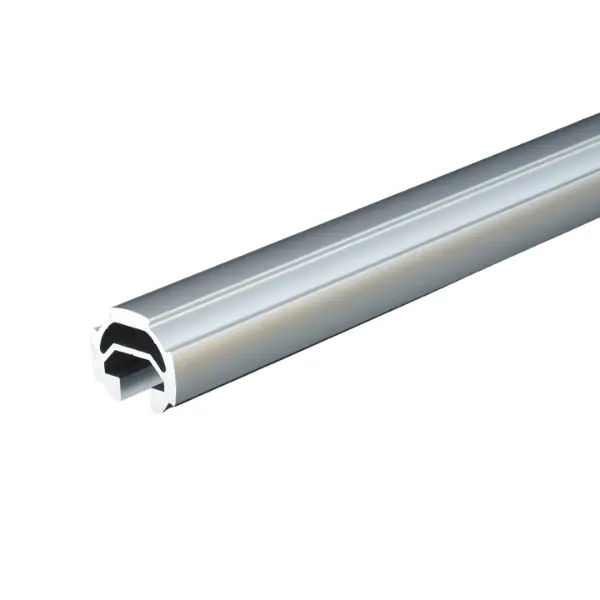
Green Frame Ø 28 mm profile with 10 mm slot for T-nuts: fix plate castors, panels, hooks and rollers where needed. Typical base of pipe trolleys. 0.68 kg/m, 4000 mm bar or cut to length.
Green Frame · GF-N Ø 28 profiles
GF-N profile with C10 slot: Ø 28 mm pipe with slot for T-nuts, castors and panels
The Green Frame profile with a 10 mm slot on one side: insert a T-nut and use a screw to fix plate castors, panels, brackets, hooks and rollers wherever you want. The round side connects with GF-N outer connectors. It is the typical profile for the base of pipe trolleys.
Why choose it
Fixings wherever you want
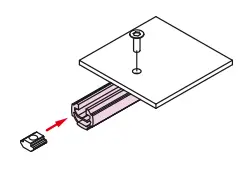
With the T-nut in the slot you fit castors, brackets and panels at any point, without drilling the pipe.
Designed for trolleys
Two side-by-side slotted profiles carry the plate castors with four T-nuts and the foot brake.
The slot acts as a guide
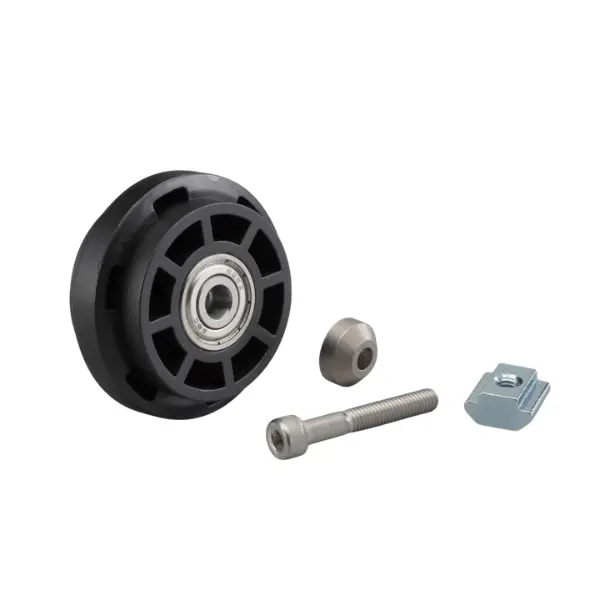
Slot rollers run in the slot: slides and sliders move along the profile.
Still a Green Frame pipe
The round side takes GF-N outer connectors: you can fit it into any Ø 28 frame.
Choose it if…
- You need to fix plate castors under a trolley.
- You want to mount panels, brackets, hooks or sensors in an adjustable position.
- You need a guide for rollers or slides along the pipe.
Choose another solution if…
- The cross member does not need to carry accessories: the standard pipe is lighter (0.37 kg/m): GF-N profile →
- You need a slot on a Ø 43 pipe for more heavily loaded structures: GF-G profile with C10 slot →
- You want a small slot on a light Ø 19 pipe: GF-S profile with C6 slot →
Not sure which one to choose? Use the Green Frame quick guide →
Application example
The slotted profile works where the structure has to carry something fixed to it:
- Trolley bases: plate castors and foot brake on two profiles side by side
- Panels and guards: sheets and brackets fixed with T-nuts
- Slides and sliders: slot rollers running along the profile
What you mount in the slot
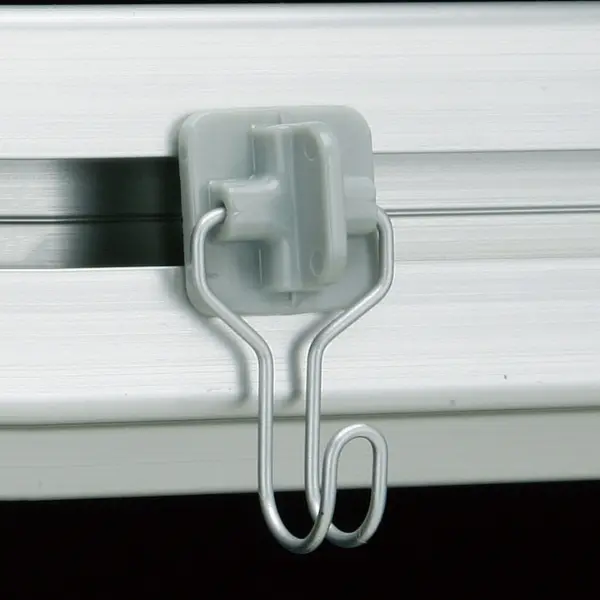
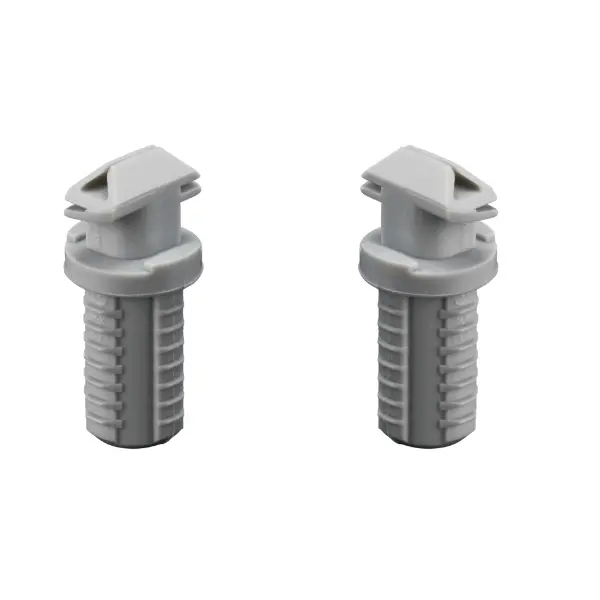
Hook for C10 slot
It slides into the slot and locks with a twist: for hanging tools and signs.
View product →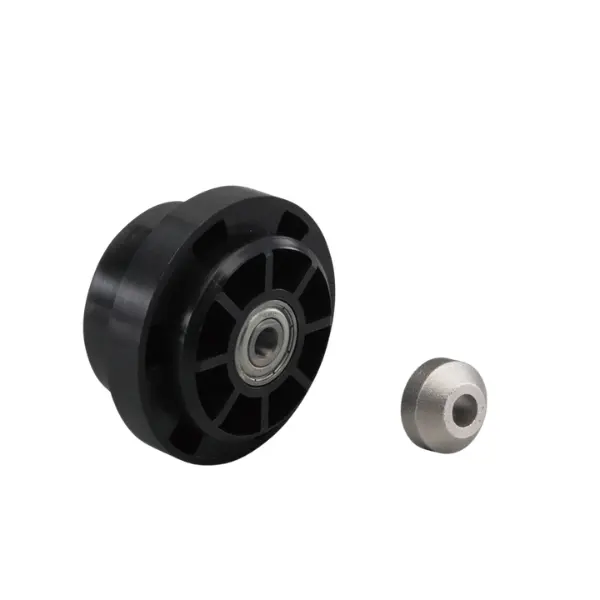
For screw fixings in the slot, T-nuts are used: you will find the type and quantity in the component list we prepare for you.
How to assemble it
Three things to know before ordering:
Orient the slot
With the slot on the side the profile is stiffer: over 1000 mm it takes 334 N at mid-span, against 200 N with the slot facing down.
Outer connectors
It connects with GF-N outer connectors, which clamp onto the round side of the profile.
Plate castors
They go on two slotted profiles side by side, fixed with four T-nuts; from Ø 100 mm upwards with a spring washer.
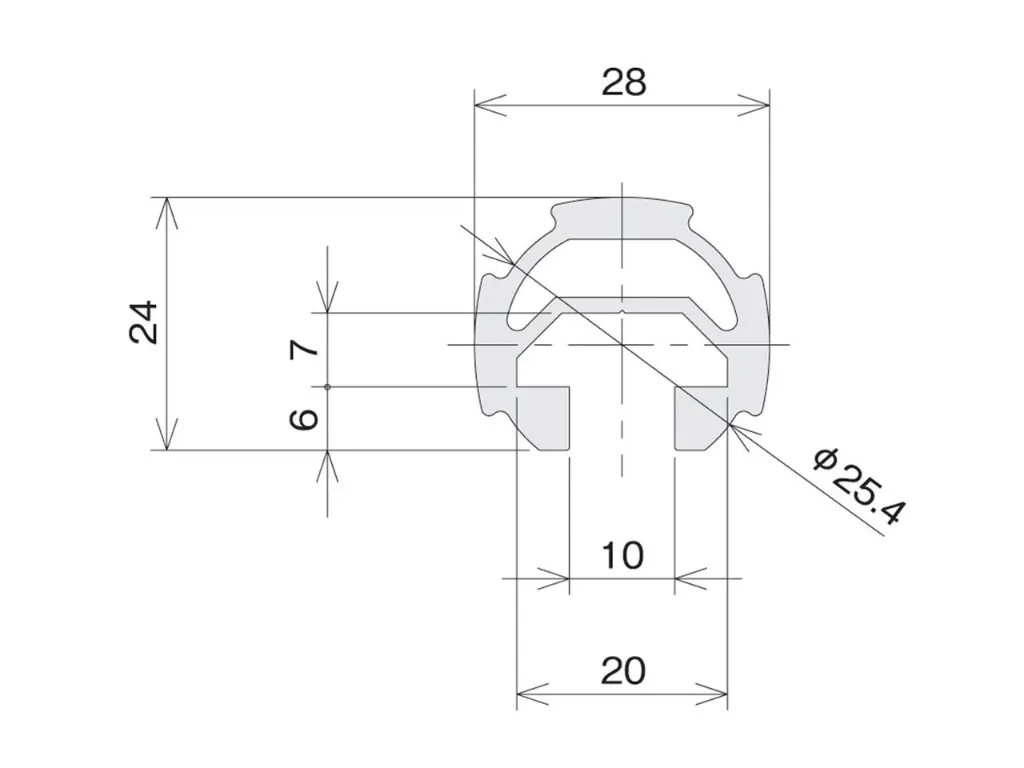
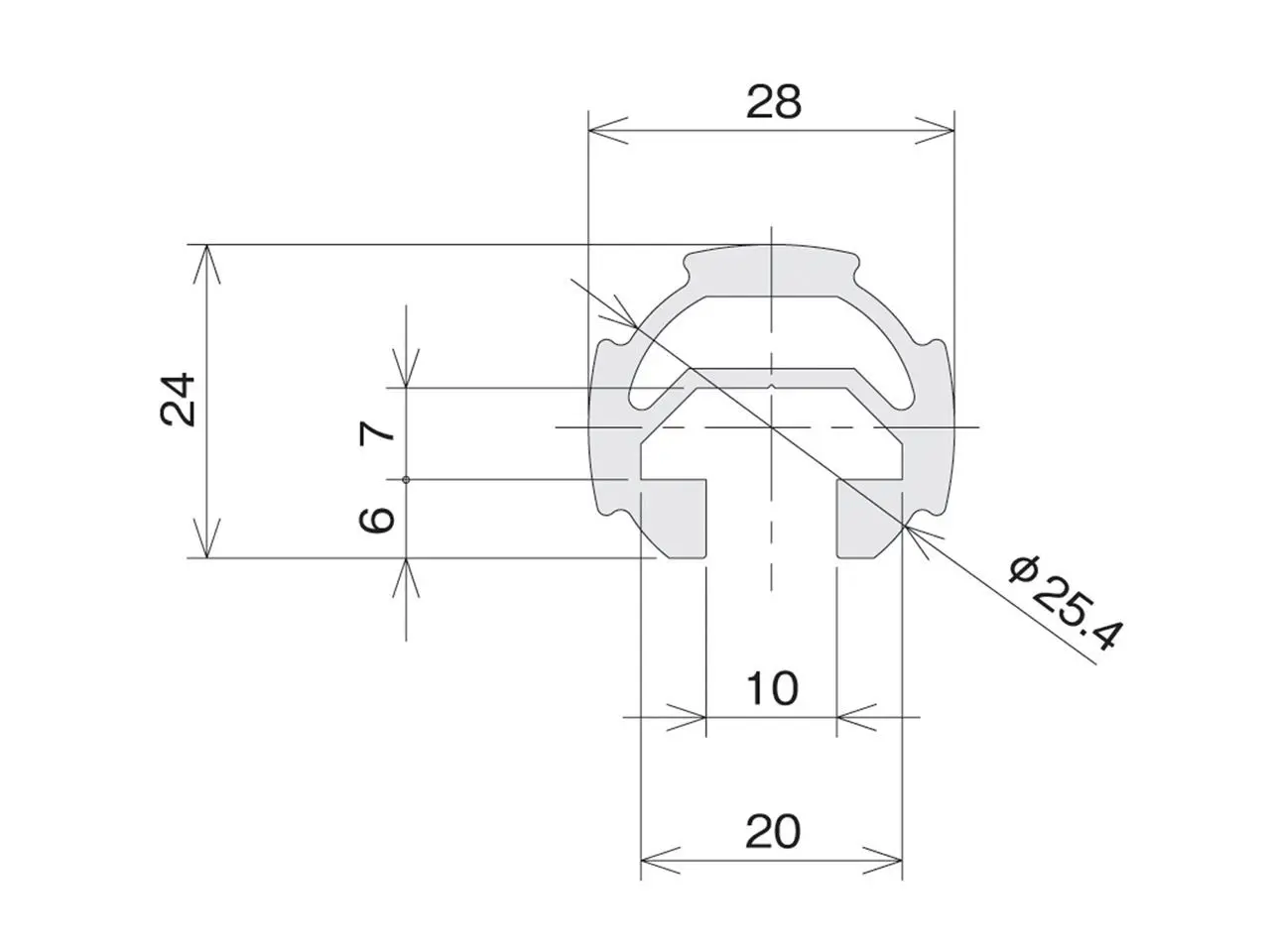
The cross-section is 28 × 24 mm: the slotted side is 4 mm lower than a standard pipe. We take this into account in the project dimensions.
The LeanProducts service
From drawing to finished structure, with a single point of contact:
Design and load calculation
We start from your sketch or dimensions: we choose profiles and connectors and check spans, joints and loads.
Cut to length
We cut the profiles in our workshop to the lengths in the design, ready to assemble.
Kit or assembled structure
You receive the kit with the cut parts and the list of components, or the structure already assembled.
Spare parts and modifications
When the process changes we supply components and new cuts to modify or extend the structure.
Send us a sketch, a photo or the overall dimensions: we will reply with codes, quantities and cut lengths.
Technical data
| Specification | Value |
|---|---|
| Code | GFF-004 |
| Series | GF-N, Ø 28 mm |
| Cross-section | 28 × 24 mm, round part Ø 25.4 mm |
| Slot | Width 10 mm, for T-nuts |
| Length | 4000 mm bar or cut to length |
| Weight | 0.68 kg/m |
| Material and finish | Anodised extruded aluminium |
| Moment of inertia | Ix = 1.19 × 10⁴ mm⁴ · Iy = 1.99 × 10⁴ mm⁴ |
| Section modulus | Zx = 0.96 × 10³ mm³ · Zy = 1.42 × 10³ mm³ |
| Load at centre, 1000 mm span | 200 N with the slot underneath, 334 N with the slot on the side (deflection 5/1000) |
| Suitable connectors | GF-N outer connectors |
| End caps | Reinforced inner end cap GFA-413, outer end cap GFA-401 |
Loads concentrated at the centre of a pipe fixed at both ends with connectors, span measured between the uprights: in a structure, joints and supports also count, and we carry out the full check on the design.
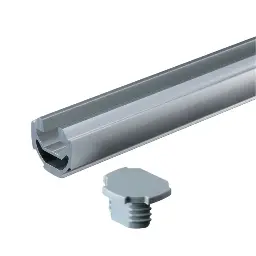 GF-N reinforced inner end cap for C10 slotted profileReinforced inner end cap
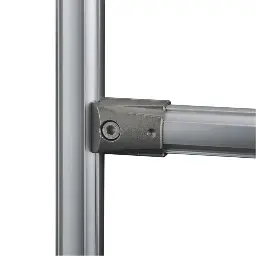 Outer 90° connector GF-NOuter 90° connector
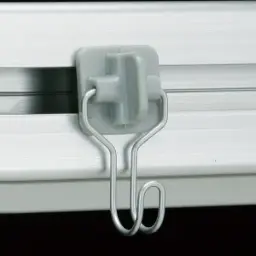 Hook for C10 slotHook for C10 slot
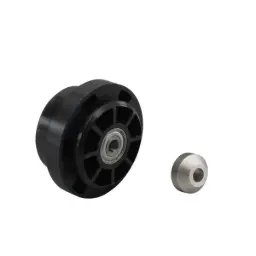 Light L40 roller kit for C10 slot GF-NL40 roller for C10 slot
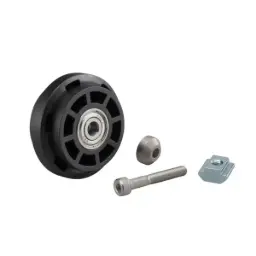 Slot roller kit GF-NSlot roller kit
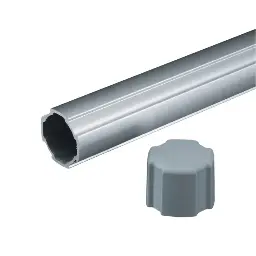 GF-N outer end capOuter end cap
Not sure which profile to use?
Send us a sketch of the structure and the weight it has to support: we will tell you the profiles, connectors and cut lengths.