Lean principles / Karakuri
Karakuri: low-cost automation that moves on its own
Karakuri uses gravity, springs, cables and counterweights to do what a motor would otherwise do: return empties, release one piece at a time, raise a shelf as it empties. No power consumption, no electrical maintenance, and it is built by the people who know the process, using the Green Frame tube system.
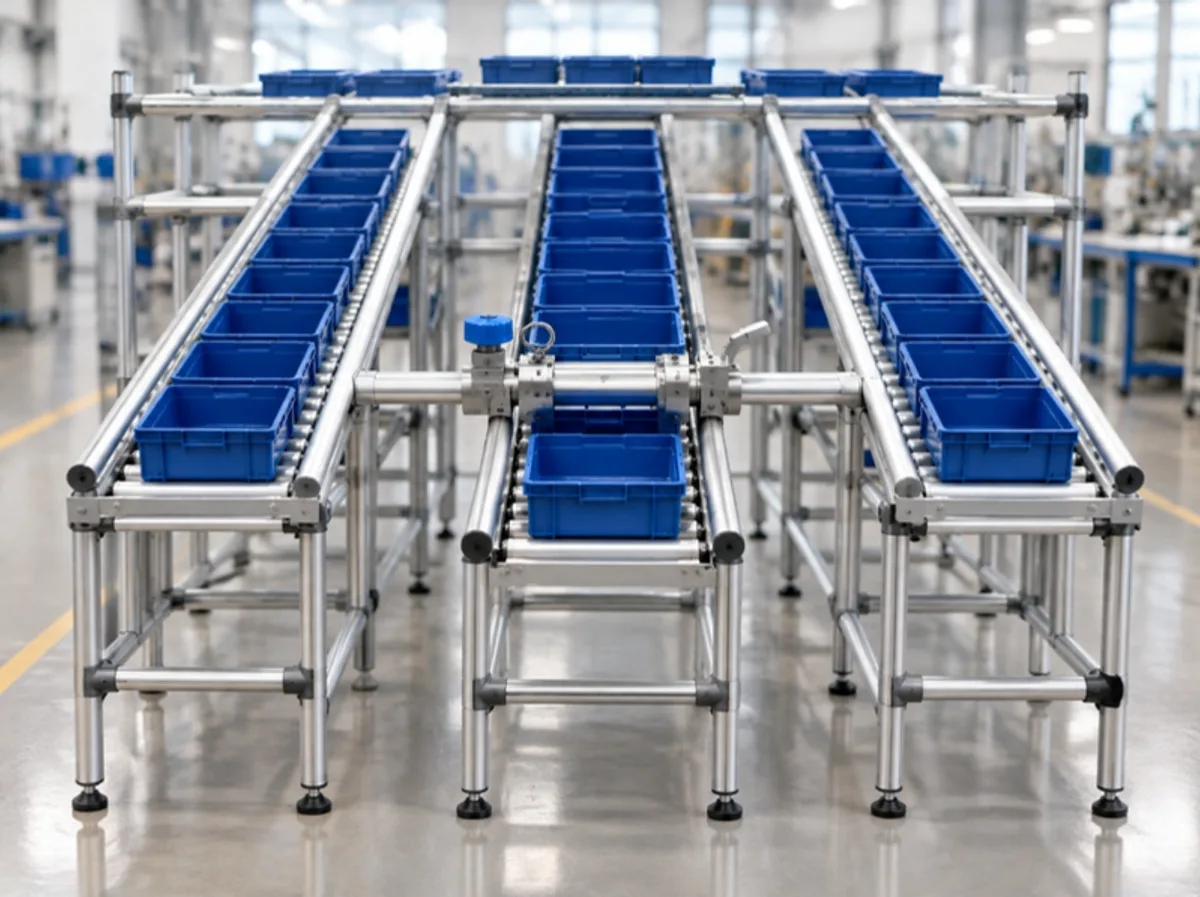
Rolling instead of sliding
Motion that returns
One piece at a time
Why karakuri pays off
Many movements at the workstation are short and repetitive: returning the empty container, bringing the full one closer, holding the queue. Automating them with motors and sensors is costly and needs maintenance; with a karakuri mechanism a few mechanical components are enough.
Karakuri is also kaizen: it is designed by the people working on the line, tested and adjusted with an Allen key. The Green Frame tube system has connectors, rollers, springs and pulleys designed precisely for this.
How to spot it on the shop floor
Signal 1
Operators turning around to put away empties or reaching out to grab the full container.
Signal 2
Containers piling up at the end of the lane and pushing against the first piece.
Signal 3
Small automations postponed because "it needs a motor and a PLC".
01
Gravity and rollers: the container moves by itself
Inclined planes, guides and chutes on which containers and moving parts roll instead of sliding.
The problem
Containers pushed by hand, guides wearing out, slides getting stuck.
The solution
Roller kits to fix to the GF-N tube or into the C10 slot, and wheel sections for chutes and empty-return lanes.
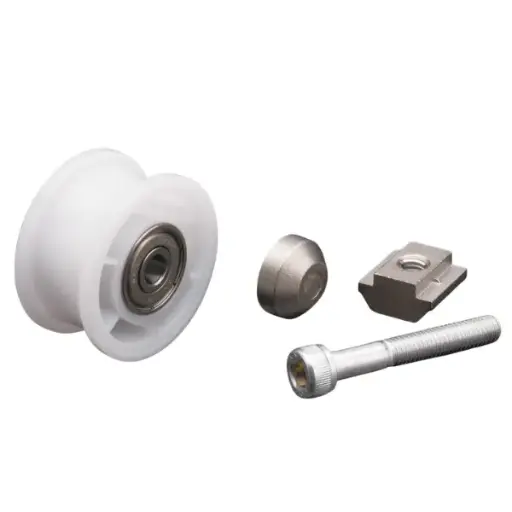
GF-N roller kit
POM roller on bearing
Fixed to the structure wherever containers and parts need to roll; 150 N per roller.
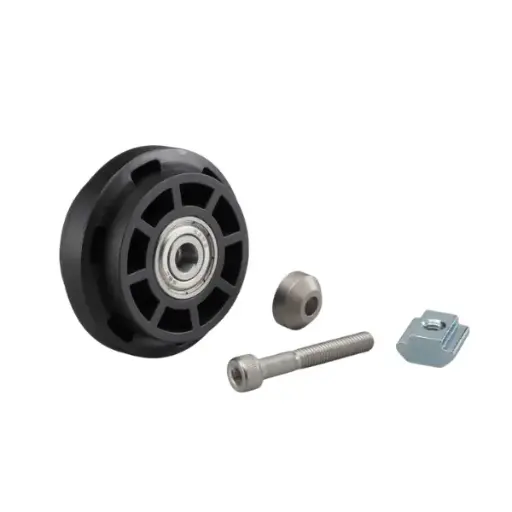
GF-N slot roller kit
For guided shelves
Resin roller on two bearings in the 10 mm slot: for sliding shelves and frames, such as spring lifts.
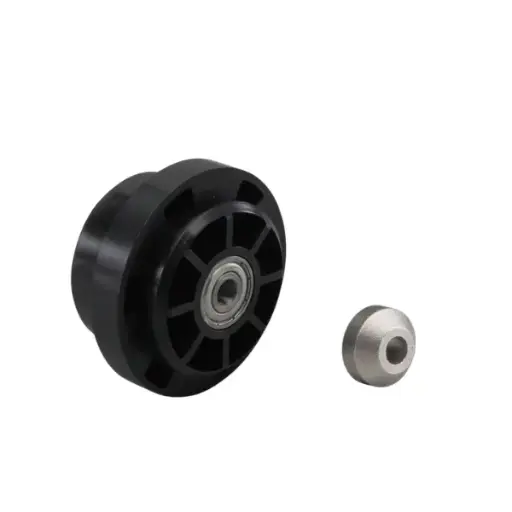
Light L40 roller kit
For guides and slides
Polyamide roller for the C10 slot of the GF-N tube; 150 N.
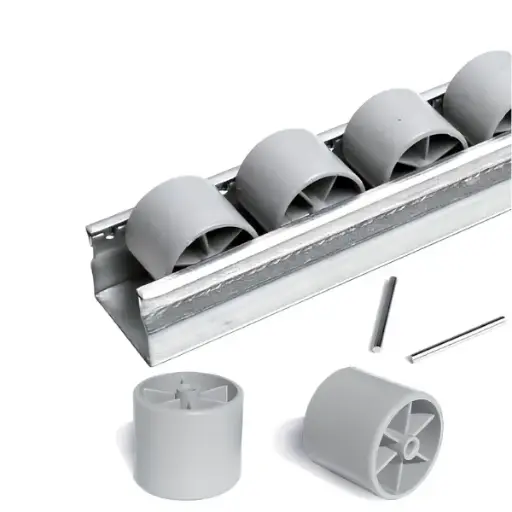
Roller track
Chutes and empty return
Bar cut to size for gravity roller tracks on Ø 28 mm tubes.
See also: Moving elements and karakuri · Gravity roller tracks
02
Springs, cables and pulleys: motion that returns
The spring returns to position, the cable transmits the motion, the pulley redirects it.
The problem
Side walls, stops and shelves that have to be reset by hand every cycle.
The solution
Tension springs in eight sizes, resin pulleys on bearings and UHMWPE cable to build mechanisms with counterweights and redirections.
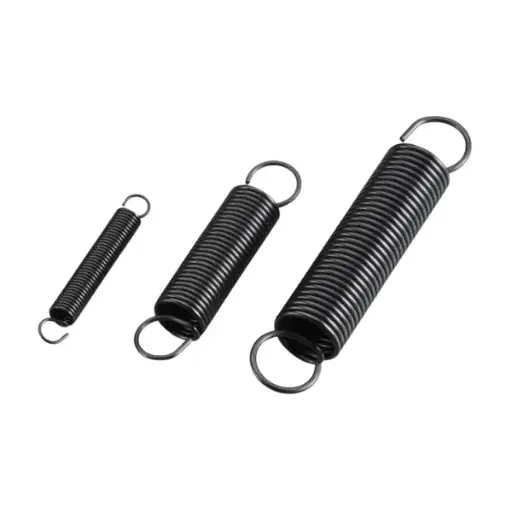
GF-N tension spring
Return without motors
Returns side walls, stops and shelves to position; eight sizes from light to heavy.
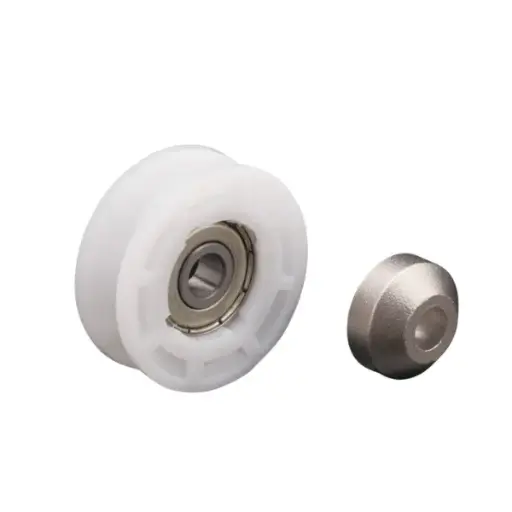
Resin pulley Ø 32 GF-N
Cable redirection
With steel bearing and stainless spacer; mounted with the support kits.
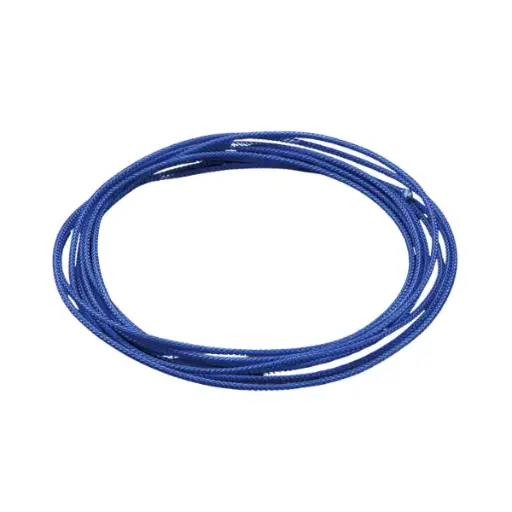
Blue cable Ø 2 mm
Transmits the motion
UHMWPE and polyester, 20 m roll, maximum pull 25 kgf.
See also: Moving elements and karakuri
03
Escapements and anti-return: one piece at a time
The mechanism holds back the queue and releases one container when the operator takes the previous one.
The problem
The weight of the queue crushes the first container, parts roll back down the chutes.
The solution
Aluminium singulators, escapement fingers and anti-return stops, to be combined on the GF-N tube system.
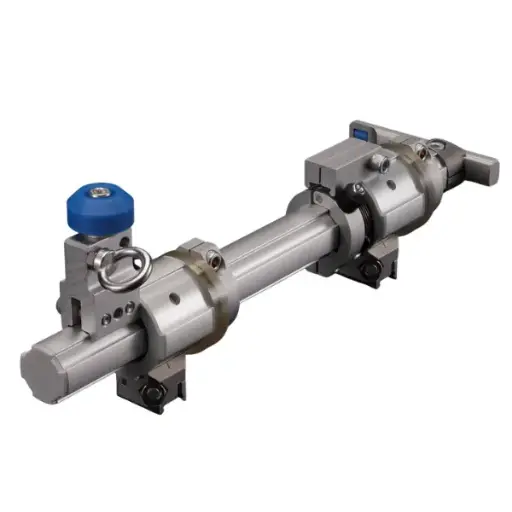
Heavy-load singulator
Holds back the queue
Up to 100 kg in the queue and 20 kg per piece; left and right versions.
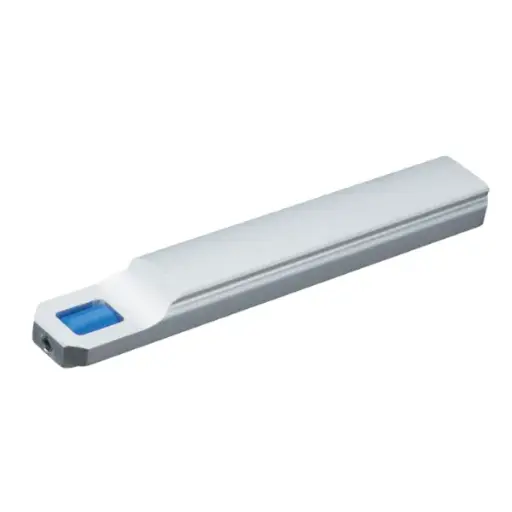
Escapement finger for stopper
The roller lever
Holds the container and releases it when the mechanism unlocks.
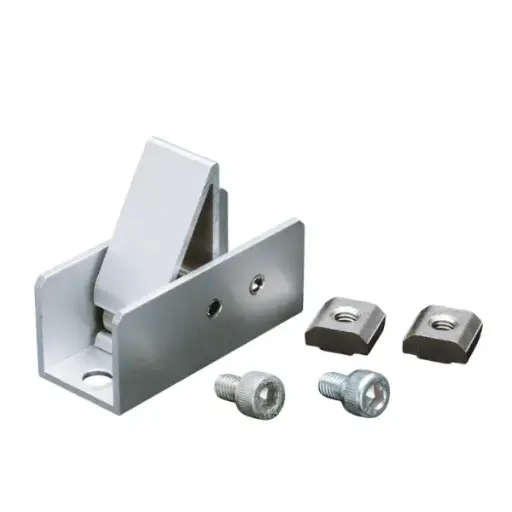
GF-N in-line anti-return
One direction only
For chutes and roller lanes: the box passes and cannot come back.
See also: Moving elements and karakuri · Supermarket and FIFO
Tools to get started
Profiles, connectors and moving elements
Examples of workstations with karakuri
We help you design it and choose the components
Have an industrial project to develop?
Choose where to start. Or call us: +39 0434 572757.
Robot demo at your site
We bring the robot to your shop floor and you see it working on your own routes.
On-site visit
We come to see your shop floor, flows and spaces, and propose the right solution.