Lean principles / Workstation ergonomics
Golden zone, reach and MTM: every movement saved is time gained
An ergonomic workstation isn't just more comfortable: it's faster. If the part is in the golden zone, within reach and easy to grasp, the cycle sheds unnecessary movements. MTM measures those movements; NIOSH, OCRA and EAWS assess the risk. Here we explain the reasoning and the equipment that puts it into practice.
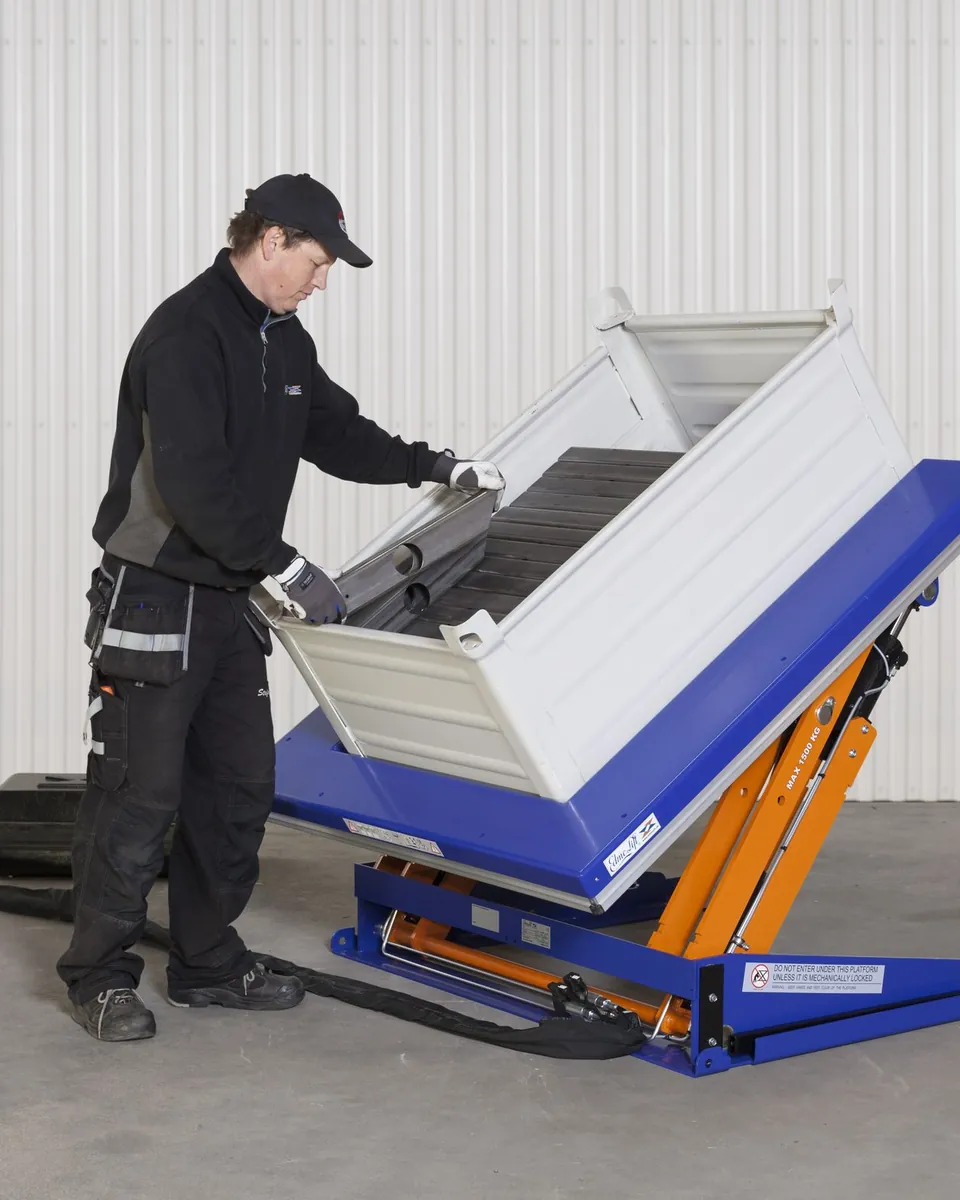
The right height
Close and easy to pick
Measured movements
NIOSH, OCRA, EAWS
Why start from the workstation
In an assembly cycle, much of the time isn't assembly: it's reaching, turning, searching and grasping. These movements are short, but they repeat hundreds of times per shift, and they are also the ones that strain shoulders, back and wrists.
Redesigning the workstation around three rules (golden zone, reach areas, easy grasp) removes movements from every cycle. MTM lets you measure how many before you even build it.
How to spot it on the shop floor
Signal 1
Containers at the back of the bench or on the top shelf.
Signal 2
Operators twisting their torso or bending to pick components.
Signal 3
Small parts in deep containers that are hard to pick from.
Side view: heights (mm)
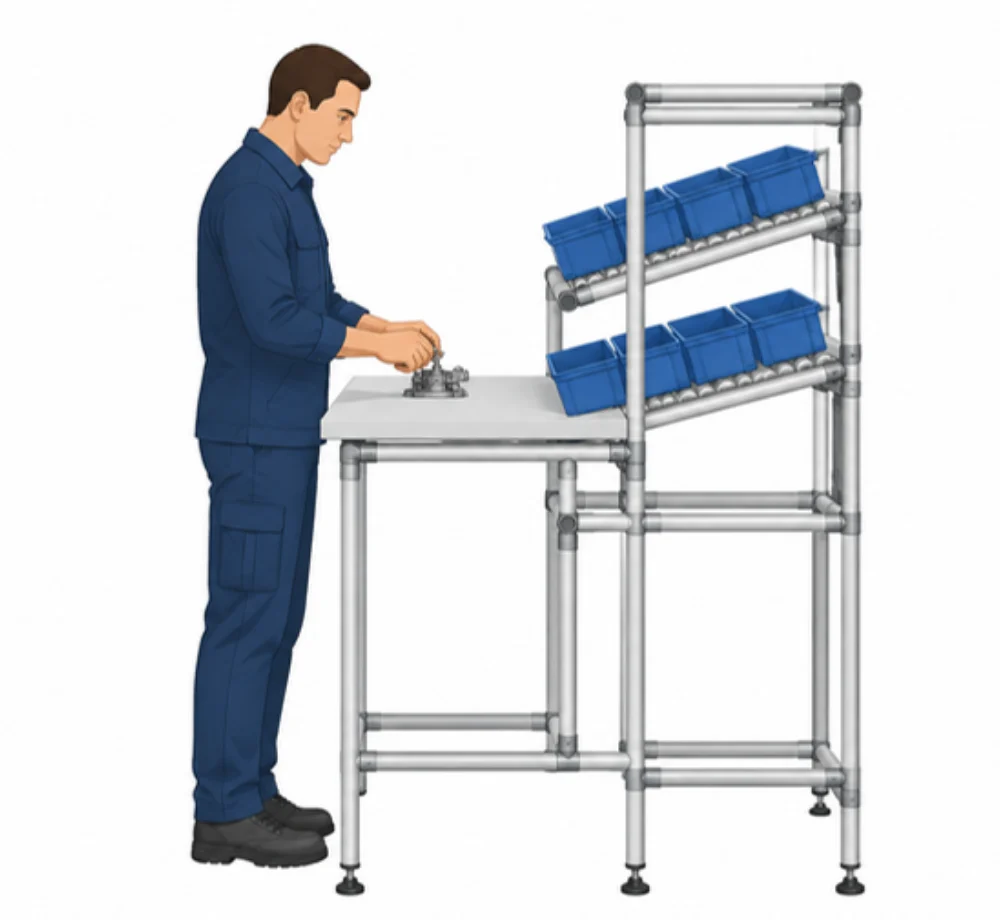
- Golden zone: optimal average working height 1125 mm ±100
- 800–1500 mm: working area, containers go here too
- Above 1500 (arms above the heart) and below 800 (bending): avoid
Top view: grasp zones
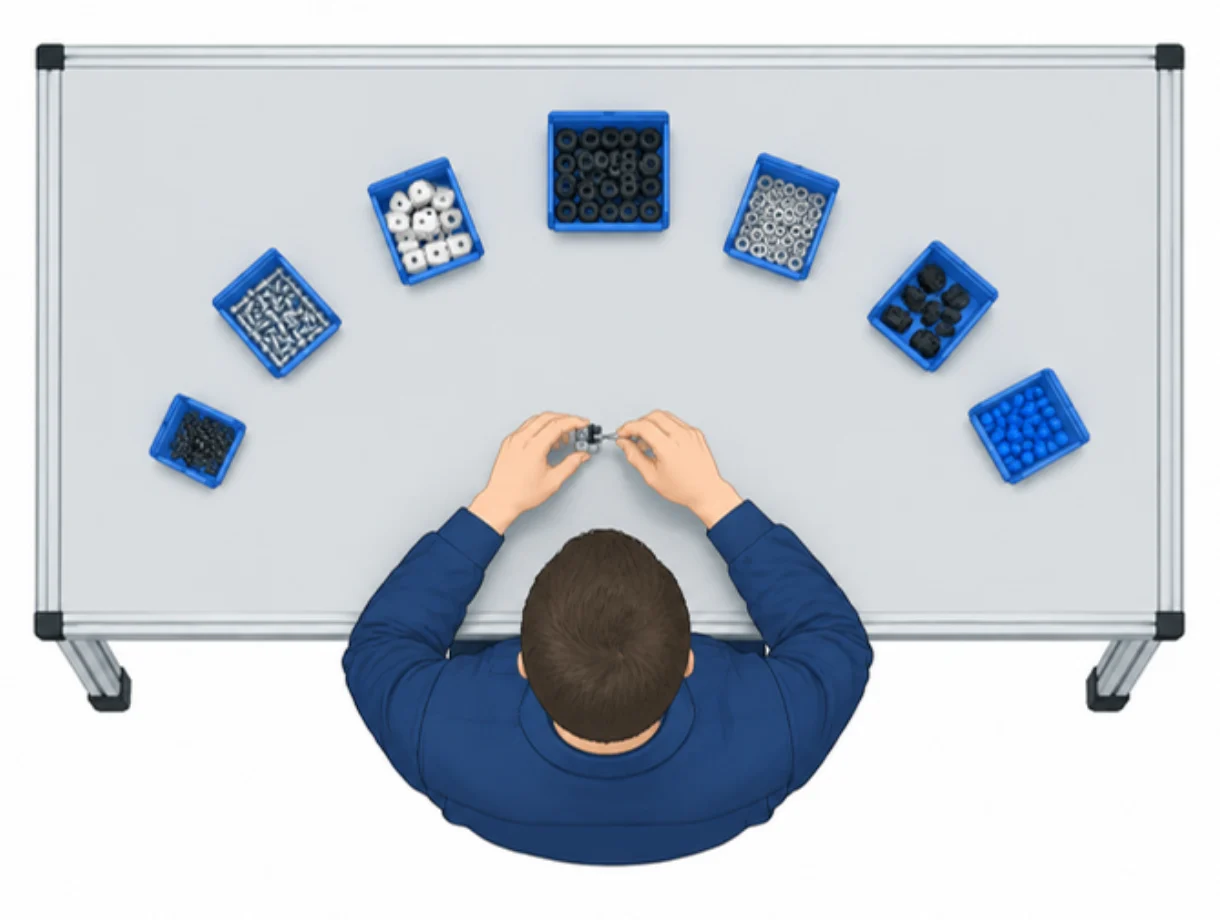
- 1 · Two-handed zone: where the two 280 mm arcs overlap, about 230 mm deep from the edge. This is where assembly happens, right in front of the eyes.
- 2 · One-handed zone: 280 mm radius from two points on the bench edge, 160 mm to the right and left of the operator's centre line. Frequently used parts and tools.
- 3 · Extended one-handed zone: 540 mm radius from the same points. Occasional use; containers stay within 400 mm of the shoulder.
- Absolute limit: forward arm reach of a 5th-percentile woman, 625 mm (DIN 33402). Dimensions in mm, diagram approximately to scale.
The rules in practice
- Working area between 800 and 1500 mm: above it you work with your arms above the heart, below it you bend.
- Optimal average working height 1125 mm ±100, adjusted to the person and the task (table below).
- The most frequently picked part goes in the one-handed zone, assembly in the two-handed zone.
- Torso tilted forward no more than 20°, neck bent or twisted no more than 25°.
- No torso twisting with loads of 1 kg or more.
Working height: it depends on who is working and what they do
The more precise the work, the closer the part must be to the eyes; the more force and movement needed, the lower it can go.
There are more than 30 cm of height difference between the shortest woman and the tallest man on a shop floor: that's why a height-adjustable workstation serves every shift with the same equipment.
| Working height (mm) by body height (mm)mm | Short woman1535 | Average woman1640 | Average man1740 | Tall man1855 |
|---|---|---|---|---|
| Precisionhigh visual control, fine motor skills | 1100 | 1200 | 1250 | 1350 |
| Medium assemblyvisual control and normal movements | 1000 | 1100 | 1150 | 1250 |
| Heavy worklittle visual control, lots of arm movement | 900 | 1000 | 1050 | 1150 |
Icons, from left: short woman, average woman, average man, tall man. The four body heights range from the shortest woman (only 5% are shorter) to the tallest man (only 5% are taller). On sit-stand workstations the worktop never goes below 1000 mm, to leave legroom.
The same dimensions in everyday picking
From the line-side supermarket to the pallet on the lift table, the rule is to bring material into the 800–1500 mm area and the most-used part numbers into the golden zone, instead of making the operator bend or stretch.
Picking from a gravity supermarket
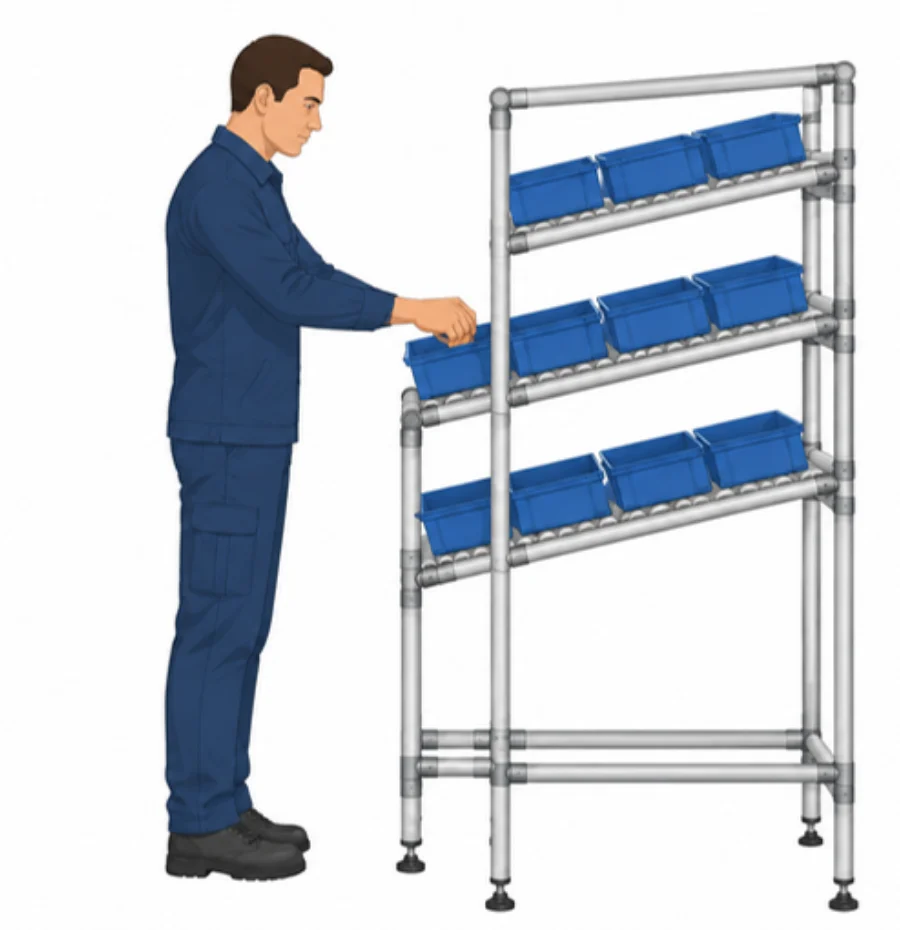
- B · 1025–1225 mm, golden zone: the most frequently picked part numbers, on the chest-height level.
- A · top level, within 1500 mm: light, infrequently picked part numbers; above that you work with your arms above the heart.
- C · bottom level: below 800 mm you bend. Only stock or rarely used containers; heavy ones are better kept close to 800 mm.
- ≤ 400 mm: maximum distance between the shoulder and the front of the container. Inclined roller tracks bring full containers to the operator; empties return via the top level.
Picking from a lift table
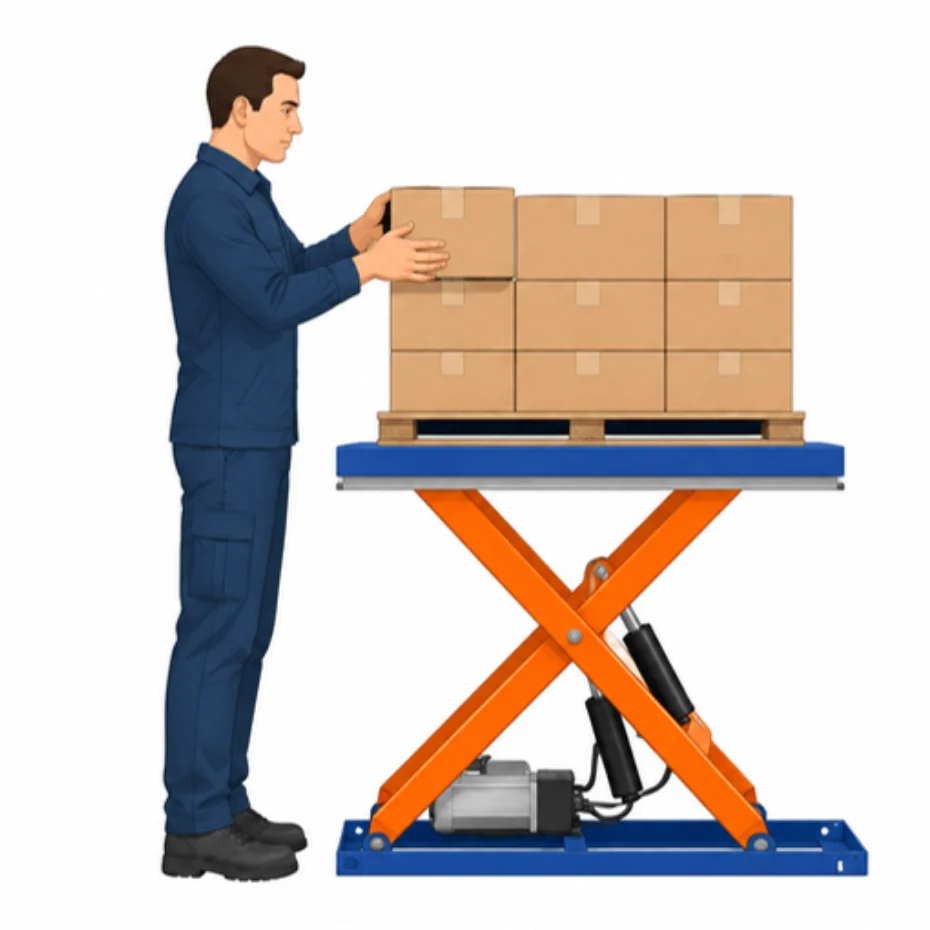
- 1 · Layer to pick: always in the 800–1500 mm area, as close as possible to the golden zone. When the layer is finished, the table lowers by one layer.
- 2 · Platform: about 900 mm in this image. A table like the TM 1500 ranges from 230 mm (loading from the floor with a pallet truck) to 1330 mm, with 1100 mm of stroke and a 1700 × 1000 mm platform.
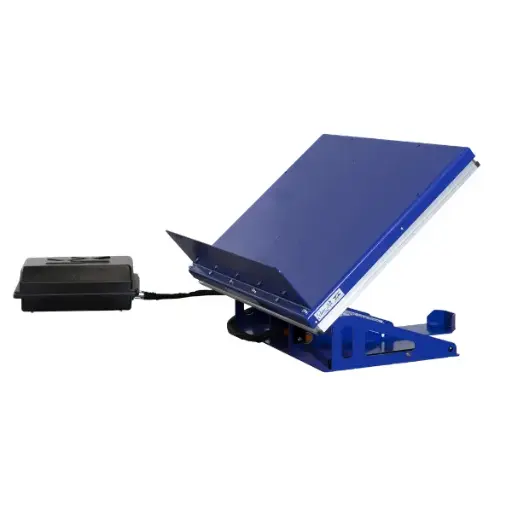
- For pallets you can add tilting towards the operator (lifters and tilters up to 40°), so there's no need to reach over to the far side.
01
Golden zone: the part at the right height
Components and loads brought into the band between waist and chest, for people of different heights.
The problem
Pallets on the floor, containers on the bottom shelf, loads that stay at the same height as they empty.
The solution
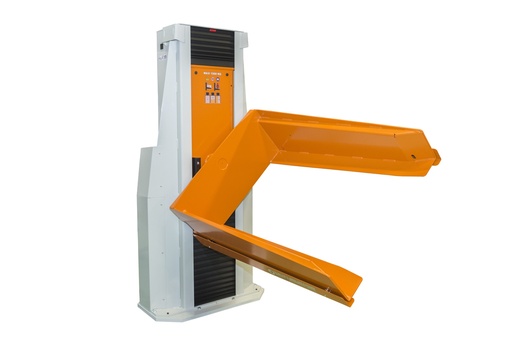
Inclined roller tracks that present the container to the operator, raised dollies, carts and lifters that raise and tilt the load.
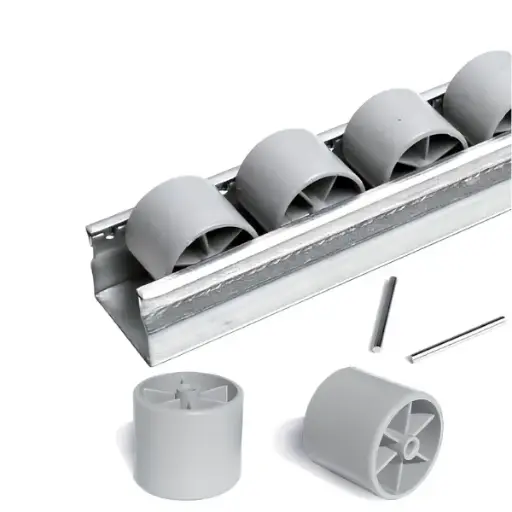
Roller track
The container slides down towards you
Green Frame gravity roller tracks cut to size.
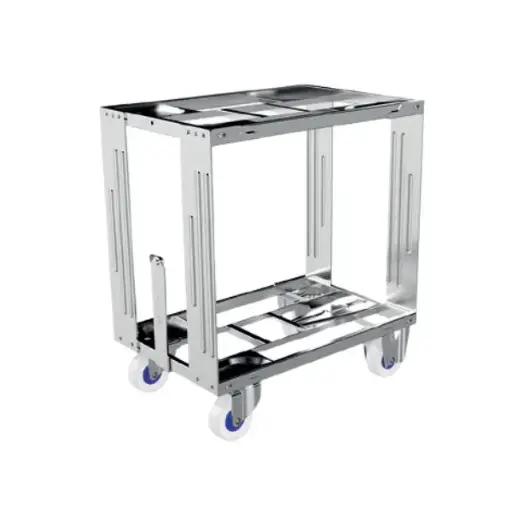
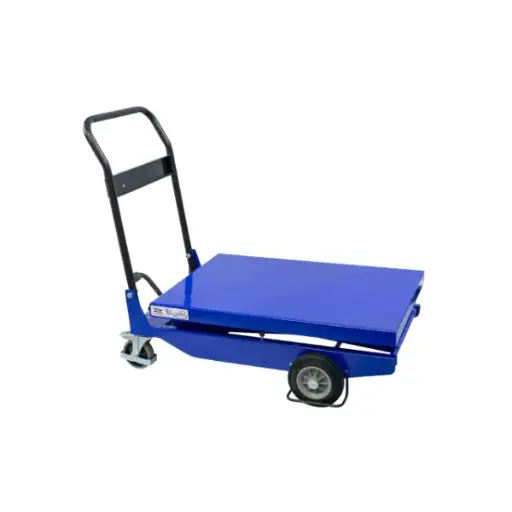
See also: Ergonomics and standard work · Lift tables
02
Reach and grasp: close and easy to pick
Every component in the normal or maximum area, in a container you can pick from with one hand.
The problem
Closed, deep or distant containers: you stretch your arm and fish for the part with your fingers.
The solution
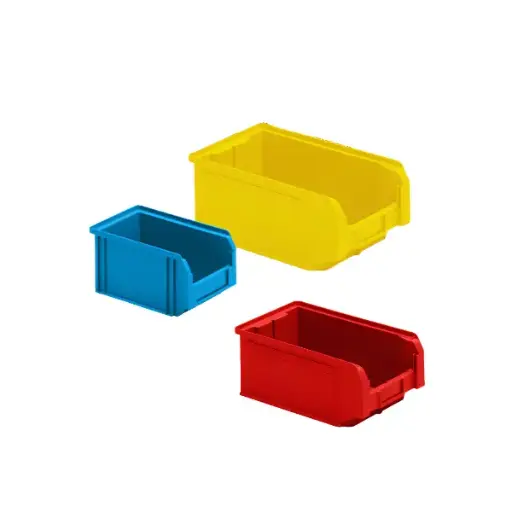
Open-front containers, cabinets with transparent drawers, flow racks that bring full containers to the operator and rollers that move the container forward.
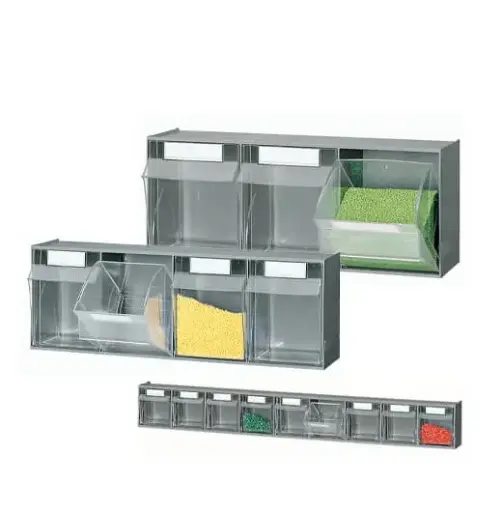
Small-parts drawer unit
Tilting transparent drawers
See what's inside and how much is left; modules can be placed side by side.
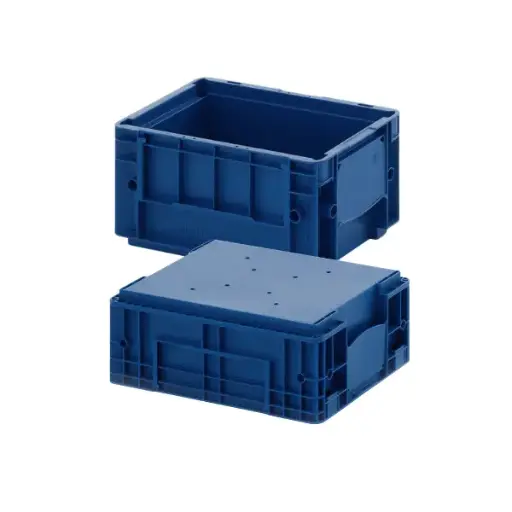
RL-KLT container
Slides on roller tracks
Full containers advance on their own into the picking zone.
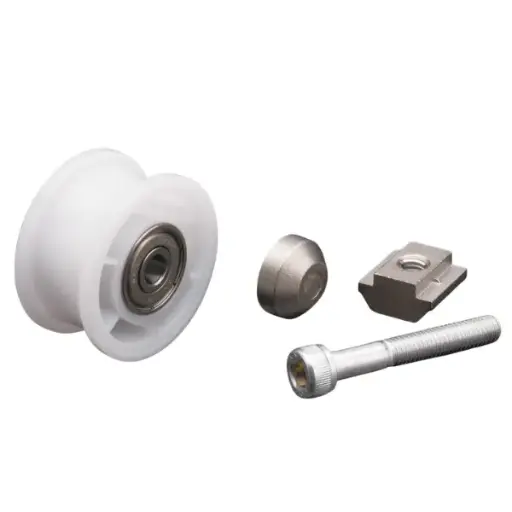
GF-N roller kit
Rolling instead of sliding
Rollers that attach to the tube system for guides and chutes.
See also: Supermarket and FIFO · Karakuri
03
MTM: every movement has a time
MTM (Methods-Time Measurement) was developed in 1948 by Maynard, Stegemerten and Schwab. It breaks manual work down into basic motions (reach, grasp, move, position, release) and assigns each one a standard time, measured in TMU: 1 TMU equals 0.036 seconds.
Reach time grows with distance; grasp time with how difficult the grip is. That's why bringing the container closer and making it open reduces cycle time measurably, right from the workstation design stage. In MTM analyses of assembly workstations, correct parts presentation can cut replenishment and picking time by up to 68%. MTM table values belong to the MTM Association: a full analysis requires a certified analyst.
Before
The screw is in a closed container at the back of the bench: the operator stretches, twists the torso, searches for the part among the others and returns to position. Long reach, difficult grasp.
After
The same screw is in an open-front container in the normal area, tilted towards the operator: short arm movement, simple grasp, no torso twisting.
Calculation example
If the new layout saves half a second per cycle, with 1,000 cycles per shift, 2 shifts and 220 working days that adds up to 220,000 seconds: about 61 hours a year on a single workstation. The starting value must be measured on your own cycle.
Assessing the risk: NIOSH, OCRA, EAWS
Measure the risk before choosing the equipment. These are the most widely used methods in Italy and Europe; for their application, refer to the standards and a qualified professional.
Lifting
NIOSH
The NIOSH equation calculates the recommended weight based on height, distance, frequency and grip. It is the reference method of ISO 11228-1 for manual lifting.
Repetitive movements
OCRA
The OCRA index assesses upper-limb load in repetitive tasks; it is the preferred method of ISO 11228-3 and EN 1005-5.
Assembly
EAWS
The European Assembly Worksheet is a first-level screening method widely used in automotive: it assesses postures, forces, loads and upper limbs on a traffic-light scale.
04
When the risk is the load
If the assessment flags lifting, the load doesn't get any lighter: the equipment takes it over.
The problem
Heavy parts lifted by hand from the workstation to the bench or the machine.
The solution
Work Positioners that pick up and position the part, tables that bring the load to working height.
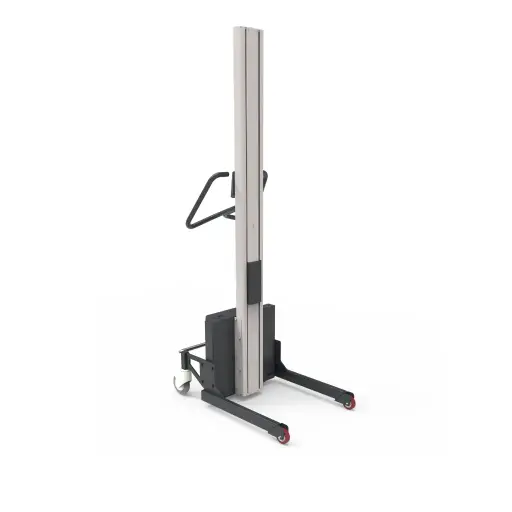
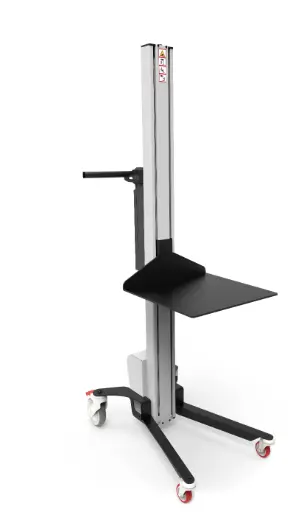
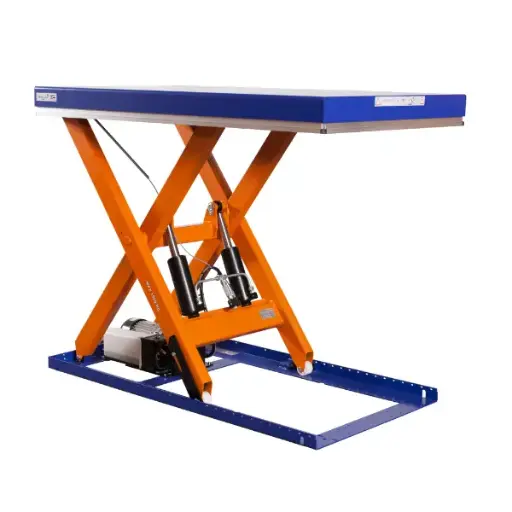
See also: Work Positioner · Work Positioner buying guide
Tools to get started
Lifting, positioning, standards at the workstation
Capacities, strokes and grippers
Let's start from your cycle
Have an industrial project to develop?
Choose where to start. Or call us: +39 0434 572757.
Robot demo at your site
We bring the robot to your shop floor and you see it working on your own routes.
On-site visit
We come to see your shop floor, flows and spaces, and propose the right solution.