In an assembly cycle, much of the time is not assembly at all: it is reaching, turning, looking for the part. These are short movements repeated hundreds of times per shift. Here are the 10 checks to make in front of a workstation, with the dimensions to verify with a tape measure.
1–3 · The right height
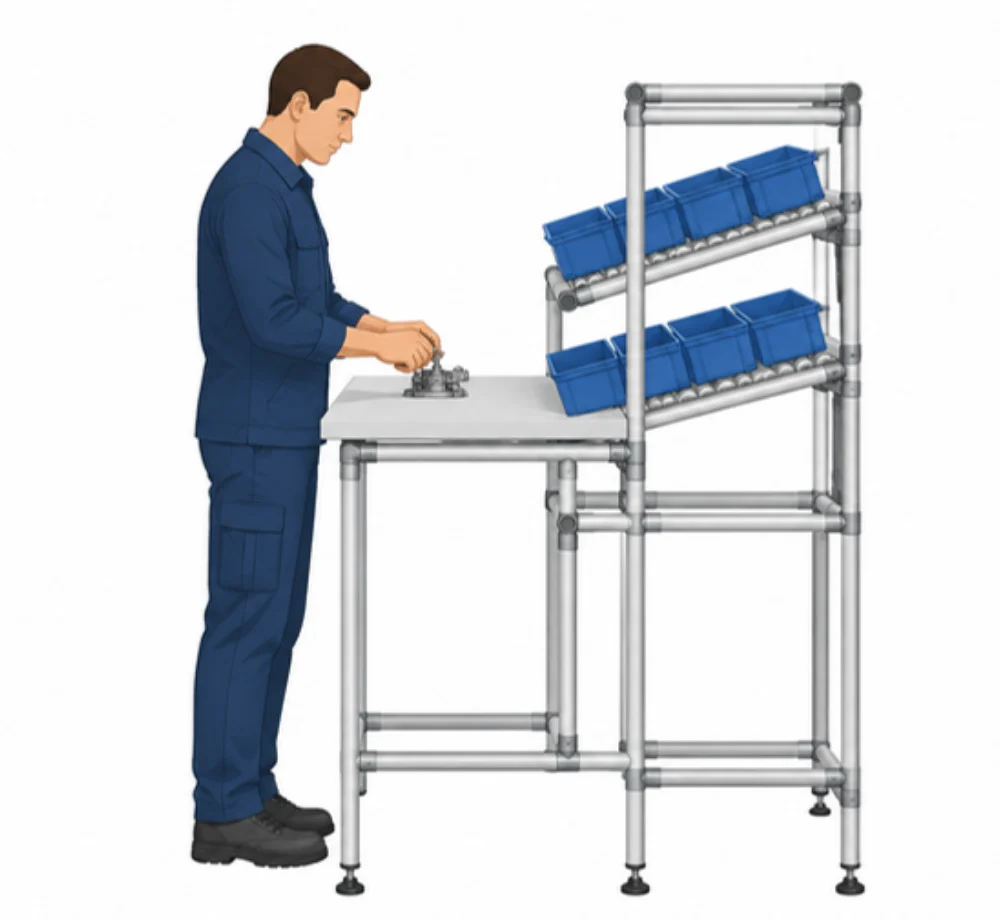
- Is the work between 800 and 1500 mm? Above it you work with your arms above the heart, below it you bend over.
- Is assembly in the golden zone? The optimal average working height is 1125 mm ±100.
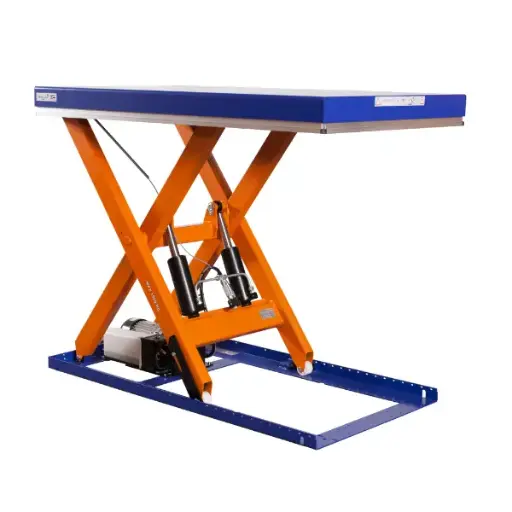
- Does the height match the person and the task? For average assembly work it ranges from 1000 mm (short woman) to 1250 mm (tall man); precision work goes up to 1350 mm, heavy work drops to 900. Between the shortest woman and the tallest man in a department there are over 30 cm of height: an adjustable workstation serves every shift.
4–6 · Within reach

- Is assembly done in the two-hand zone? It is where the two 280 mm arcs overlap, about 230 mm deep from the edge of the bench: the part is right in front of the eyes.
- Are the most used parts in the one-hand zone? Radius 280 mm from two points on the edge, 160 mm to the right and left of the operator's centreline.
- No container more than 400 mm from the shoulder? The extended zone (R 540 mm) is only for occasional use; the absolute limit is the outstretched arm of the 5th-percentile woman, 625 mm.
7–8 · Posture
- Does the trunk stay within 20° of inclination and the neck within 25°? If the operator looks down for the whole cycle, the part is too low or too far away.
- No trunk rotation with loads of 1 kg or more? The container goes in front, not to the side or behind.
9–10 · Grasping and replenishment
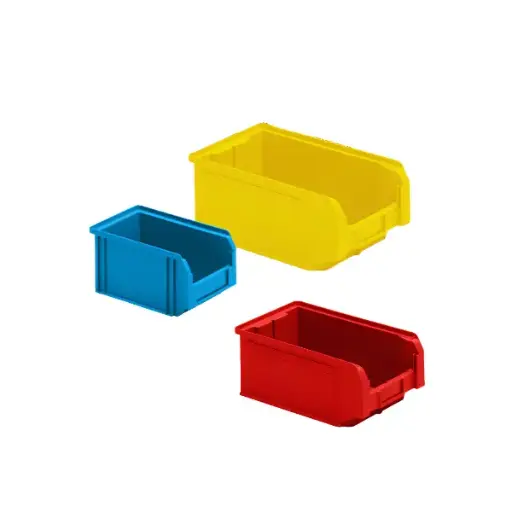
- Can the part be picked without searching for it? Open-fronted containers tilted towards the operator make picking easy: it is the easy grasp of MTM.
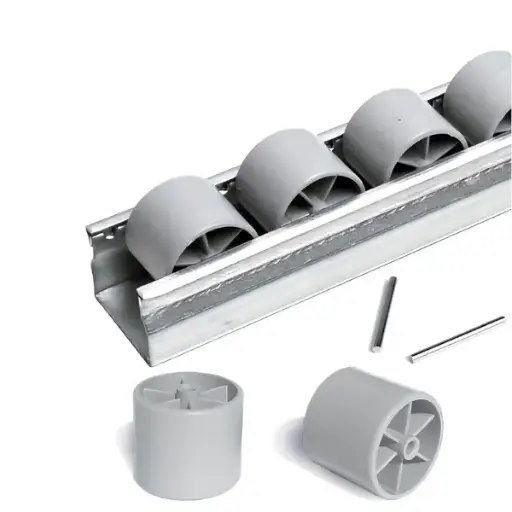
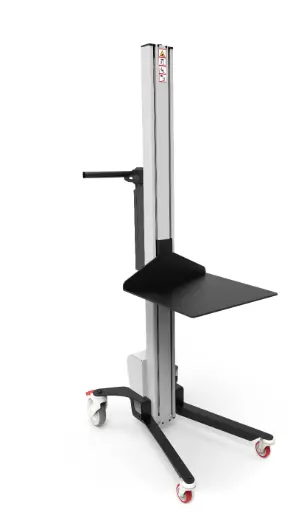
- Do full containers arrive by themselves and empties go back without walking? With gravity roller tracks the container slides towards the operator; the most frequently picked items go on the level at chest height.
What half a second is worth
MTM assigns a standard time to every basic movement: reach grows with distance, grasp with how difficult the grip is. If the new layout saves half a second per cycle, with 1,000 cycles per shift, 2 shifts and 220 working days that is 220,000 seconds: about 61 hours a year on a single workstation. The starting value must be measured on your own cycle.
Frequently asked questions
What is the golden zone of a workstation?
It is the height band where work is easiest: the optimal average working height is 1125 mm ±100, inside the working area between 800 and 1500 mm. Above it you work with your arms above the heart, below it you bend.
How high should the work surface be for assembly?
It depends on the person and the task. For medium assembly it ranges from 1000 mm (short woman) to 1250 mm (tall man); precision work goes up to 1350 mm, heavy work goes down to 900 mm. An adjustable workstation suits every shift.
How far away should the parts bins be?
The most used parts belong in the one-hand zone, within a 280 mm radius. The extended zone, with a 540 mm radius, is only for occasional use. No bin should be more than 400 mm from the shoulder; the absolute limit is 625 mm.
How much time do you recover by fixing the workstation?
It depends on the cycle, and it has to be measured. As an order of magnitude: half a second less per cycle, with 1,000 cycles per shift, 2 shifts and 220 working days, is about 61 hours a year on a single workstation.
Want to check a workstation with us? Contact us: we start from the real dimensions and your cycle.