- All Products
- AL Modular System
- Feet and wheels
- Accessories for feet
- Floor anchor
Floor anchor
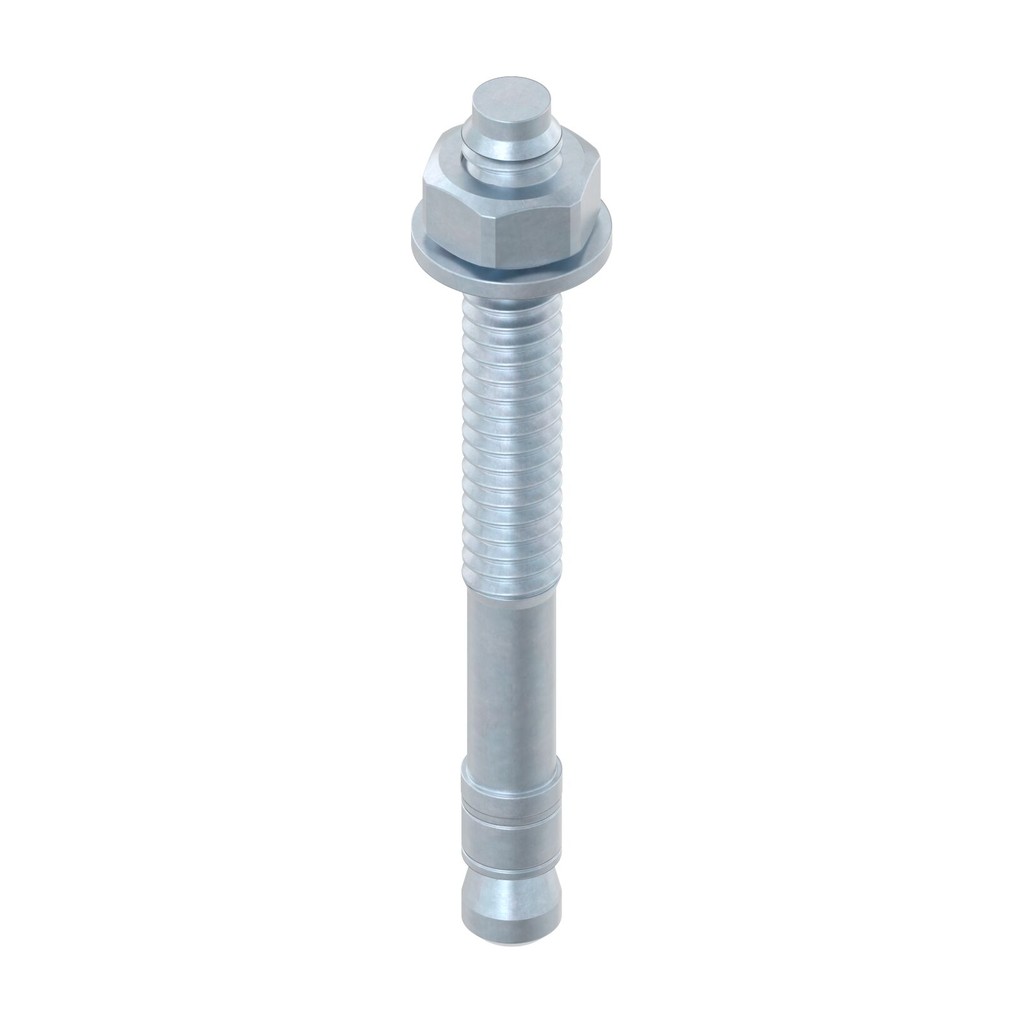
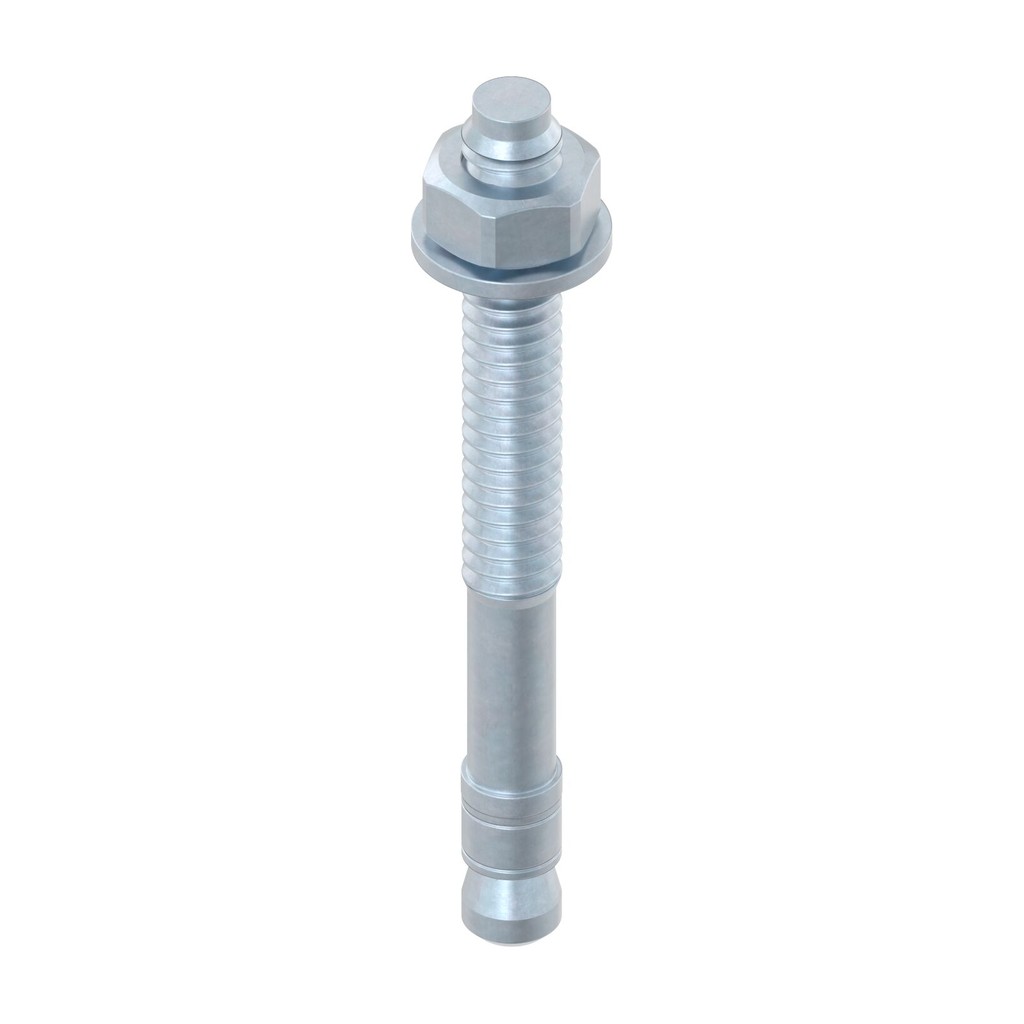
https://leanproducts.eu/shop/floor-anchor-2903 https://leanproducts.eu/web/image/product.template/2903/image_1920?unique=1d9bc53Zinc-plated steel anchor for fixing foundation brackets and base plates of strut profile structures to the floor: Ø 8 x 80 mm (15 Nm) or Ø 10 x 90 mm (30 Nm), clamping thickness up to 15 mm.
AL Modular System · Connection elements
Floor anchor
Workbenches, shelving and guards that must not move have to be fixed to the floor. The anchor is inserted into the hole drilled in the floor through the foundation bracket or the base plate and, when you tighten it, locks the structure. With the foundation bracket you can drill the floor hole without removing the bracket.
Why choose it
Anchored structure
Locks to the floor workbenches, guards and frames subject to thrust.
Through hole
You drill the floor through the bracket or plate, without removing them.
Two sizes
Ø 8 for the foundation bracket, Ø 10 for higher tightening torques.
Data and compatibility
| Property | Value |
|---|---|
| Diameter × length | Ø 8 x 80 mm · Ø 10 x 90 mm (M10) |
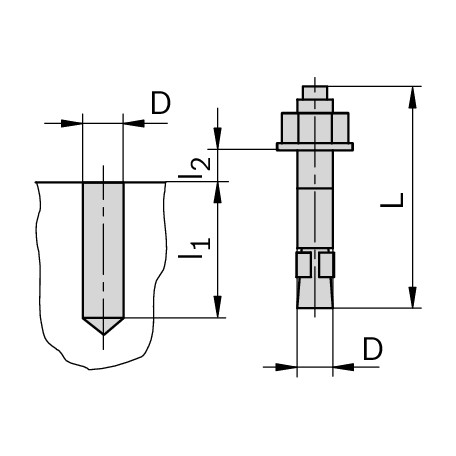
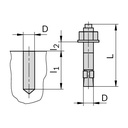
| Anchoring length l1 | Ø 8: 65 mm · Ø 10: 70 mm |
| Clamping thickness l2 | Up to 15 mm |
| Tightening torque | Ø 8: 15 Nm · Ø 10: 30 Nm |
| Material | Zinc-plated steel |
| Versions | 2 codes: Ø 8 x 80 · Ø 10 x 90 |
Choose the variant above: data and code update in the Specifications tab. The clamping thickness is that of the bracket or plate under the nut.
Need help with your profile parts list?
Send us a sketch or the parts list: we will give you codes, accessories and cut lengths.
Specifications
| Surface treatment | Zinc plating |
| Tightening torque Nm | 15 |
| Production method | Moulding |
| Technical notes | Tassello per fissaggio al pavimento; l1 65, l2 max 15 mm |
| Thread | M10 |
| Diameter | 8 mm |
| Material | Zinc-plated steel |
| Brand | Bosch Rexroth |
| Length mm | 80 mm |
| Tags | |
|---|---|
| Tags |
Bosch 5S1
|
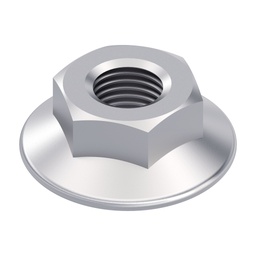
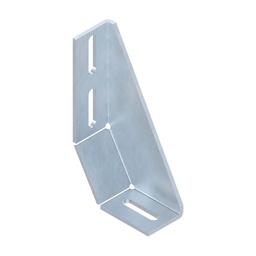
For fixing to the profile, T-bolts M8x20 for slot C10 and flange nuts M8; for the floor, the floor anchor. Fit the bracket on the upright, rest it on the ground, drill through the bracket and insert the anchor.
T-bolts M8x20 for slot C10 and flange nuts M8: the screw goes into the upright's slot and the nut clamps the plate. To anchor it to the floor add the floor anchor and the washer.
Ø 8 is the size specified for the foundation bracket; Ø 10 takes a higher tightening torque (30 Nm) for more heavily loaded plates. Always check that the hole in the plate or bracket suits the anchor diameter.
The floor anchor is the classic alternative. The foundation screw is driven directly into the concrete with an impact wrench and can be readjusted up to twice.
On solid floors able to hold the anchor, typically concrete. On thin screeds, floating or raised floors, describe the floor to us before anchoring.
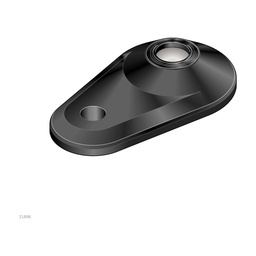
In the round plate the Ø 9 hole is close to the centre, at 21 mm on the Ø 59 and at 31 mm on the Ø 79. The oval one, 100 mm long, has the Ø 12 hole at 52 mm: the anchor sits further from the spindle. Check that the hole suits the anchor you use.
With the floor fixing wall plug: Ø 8x80 for the 135x135, Ø 10x90 for 120x120 and 150x150, Ø 8x95 for the 270x360. For 120x120 and 150x150 you can also use the foundation screw for concrete. Use the washers to compensate for unevenness.
No, this product includes only the washers. The floor fixing wall plug and the foundation screw for concrete are separate items.
This plate only rests on the floor. If you need to anchor the foot, use the base plate with screw hole, Ø 59 or 79 mm, and a wall plug.
The levelling foot M8 has no anchoring hole. If the structure must be fixed to the ground, use a base plate with fixing hole and the floor anchor.
It is the width of the profile slot and determines which accessories you use. Slot C6 (6 mm) is for 20 series profiles, C8 (8 mm) for the 30 series, C10 (10 mm) for profiles from the 40 series upwards. Nuts, screws, brackets and cover caps are chosen by slot: each accessory's product page shows the right one.
Yes. You can order the full bar or the piece cut to the length you need: we do the cutting ourselves, in our workshop. Each profile's product page shows the maximum bar length and the minimum cut length.
Look at the moments of inertia Ix and Iy: the higher they are, the less the profile deflects under load. For the same section, “L” profiles are lightened and deflect a little more. For long spans or high loads move to a larger section or a tall profile (e.g. 45x90 instead of 45x45). If you send us drawing and loads, we will check the choice.
The T-nut is inserted from the front into the slot, even in an assembled structure, and positions itself when you tighten the screw: it is the standard choice for fixing accessories. The sliding block withstands higher forces, but normally has to be inserted from the profile end before closing the frame; spring versions stay where you put them.
The simplest way is the bracket, which joins two profiles at 90° with screws and nuts in the slot, without machining. For end, T, 45° or three-way connections there are dedicated connectors, some of which require profile machining as stated on their product page.
Yes, for several accessories (for example cover caps, hinges and nuts) there are conductive ESD versions, indicated in the name or variant. Tell us which EPA area you work in and we will confirm the components to use.
On each product page you will find the MGE catalogue pages to download as PDF, with dimensioned drawings and technical data; the Specifications tab shows the data for the variant you have chosen.
Yes. Send us the parts list or a sketch with dimensions: we give you codes, quantities and cut lengths and prepare the kit with profiles already cut and the accessories.