T-nut
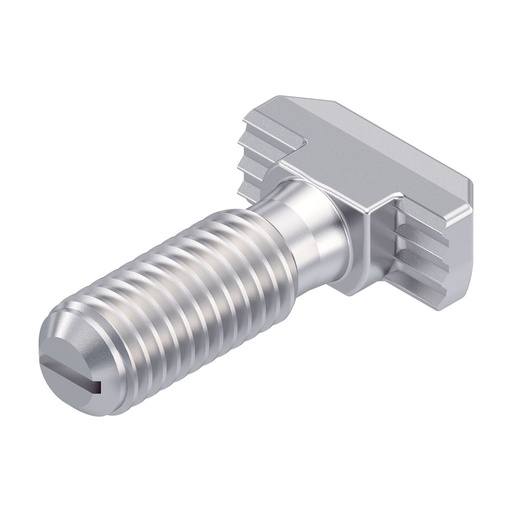
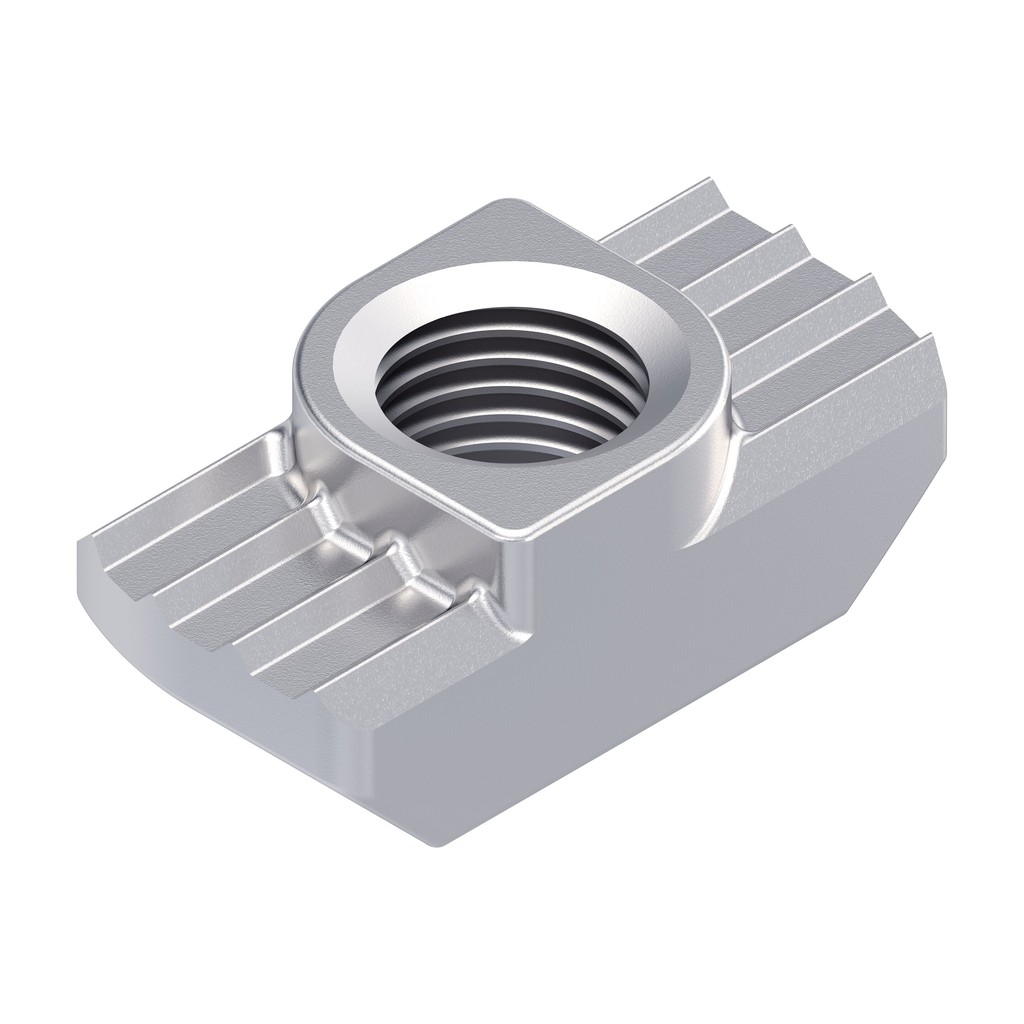
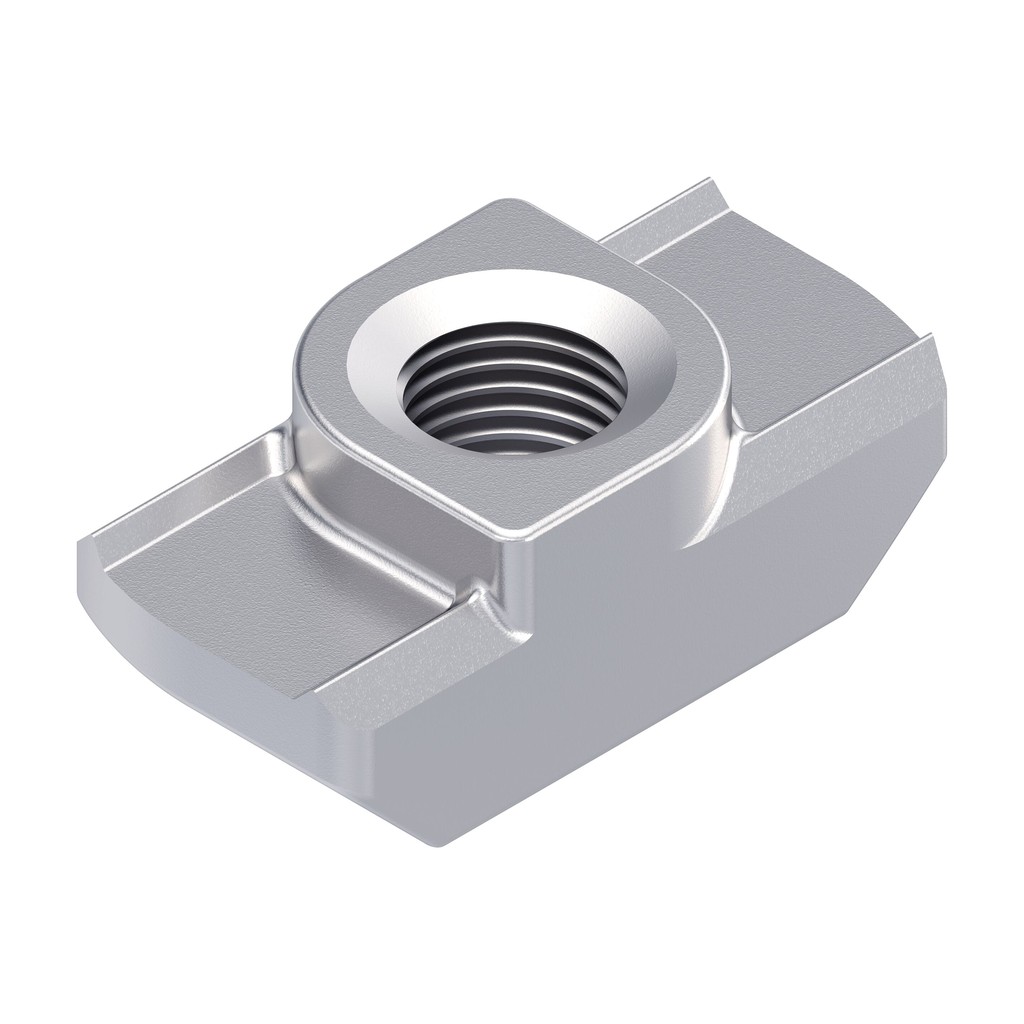
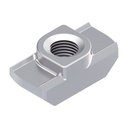
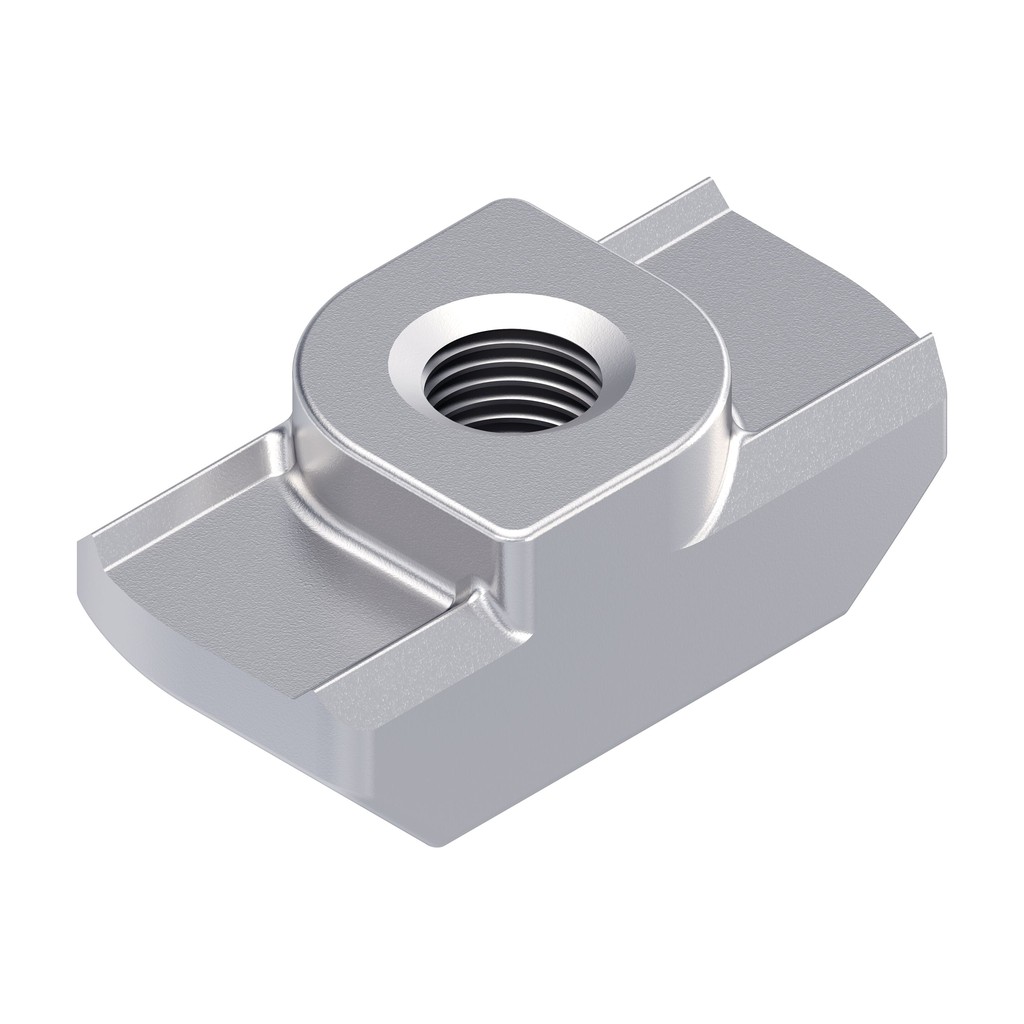
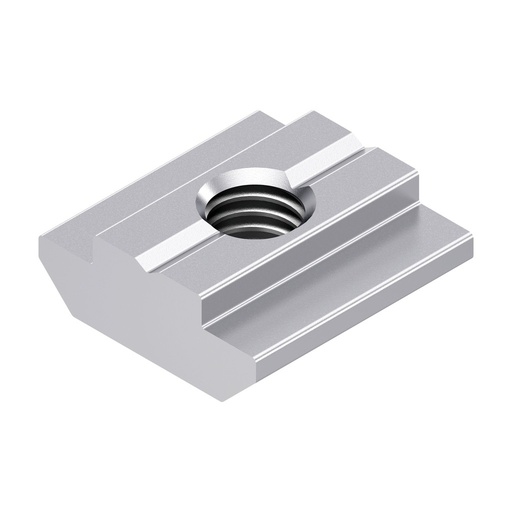
https://leanproducts.eu/shop/t-nut-2895 https://leanproducts.eu/web/image/product.template/2895/image_1920?unique=1d9bc53T-nut for aluminium strut profiles with slot C6, C8 or C10: it is inserted from the front into the slot and locks when you tighten the screw. Zinc-plated or stainless steel, threads from M4 to M8, up to 18000 N in the largest C10 profiles.
AL Modular System · Nuts and inserts
T-nut - profile nut for slot C6, C8, C10
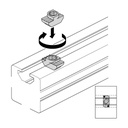
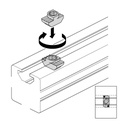
It is the profile nut you use most: it fixes brackets, handles, latches and accessories to slotted aluminium profiles without drilling and without dismantling the structure. You slide it into the slot where you need it, screw in, and the nut turns until it stops, positioning itself. It is the original Bosch Rexroth component, in zinc-plated steel for normal use or stainless steel for outdoor and clean room use, with a conductive connection between accessory and profile.
Why choose it
Fits on closed structures
You insert it from the front into the slot at any point: no need to slide out the profile or plan the nuts in advance.
Self-positioning
The stop guides it into the right position and the drag torque turns it reliably as you tighten.
Conductive connection
Creates a secure, conductive connection between accessory and profile, useful in ESD areas too.
Zinc-plated or stainless
Same shape and same load capacity: choose stainless for outdoor use, damp environments or clean rooms.
Choose it if…
- You need to fix accessories to a structure that is already assembled
- You need a conductive connection between accessory and profile
- You fit standard brackets, handles and latches
- You need the stainless version for outdoor or clean room use
Choose another solution if…
- You need to withstand higher forces and can insert the nut from the end of the profile: Standard sliding block →
- You need a nut that stays put in the slot, for example on uprights: Standard sliding block →
- You need a fastener that goes in from the front but holds more than the T-nut in C10: Standard sliding block →
Not sure which profile to choose? Open the guide with the profile table →
What you fix with the T-nut
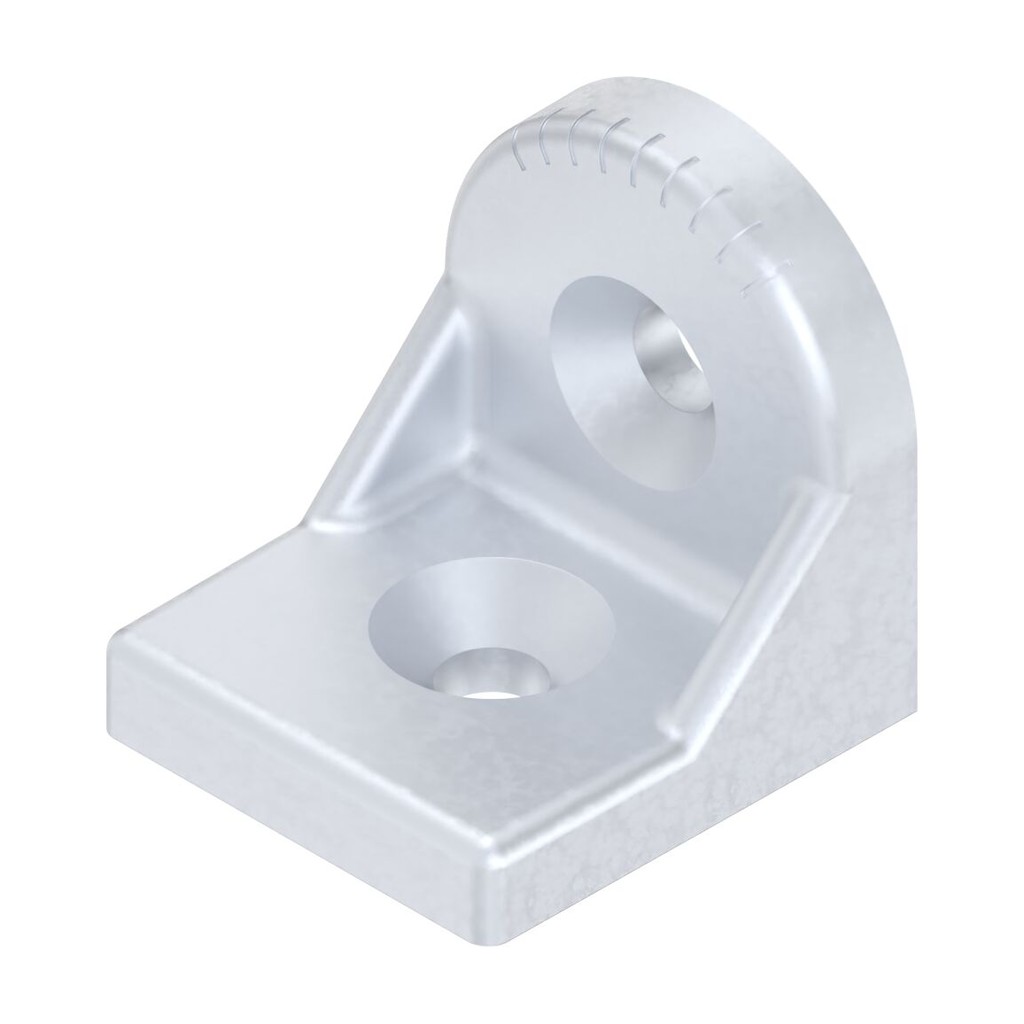
Brackets
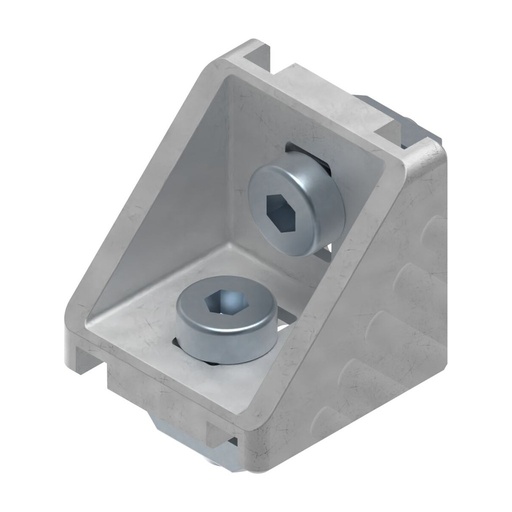
Join two profiles at 90°: the set already includes screws and nuts.
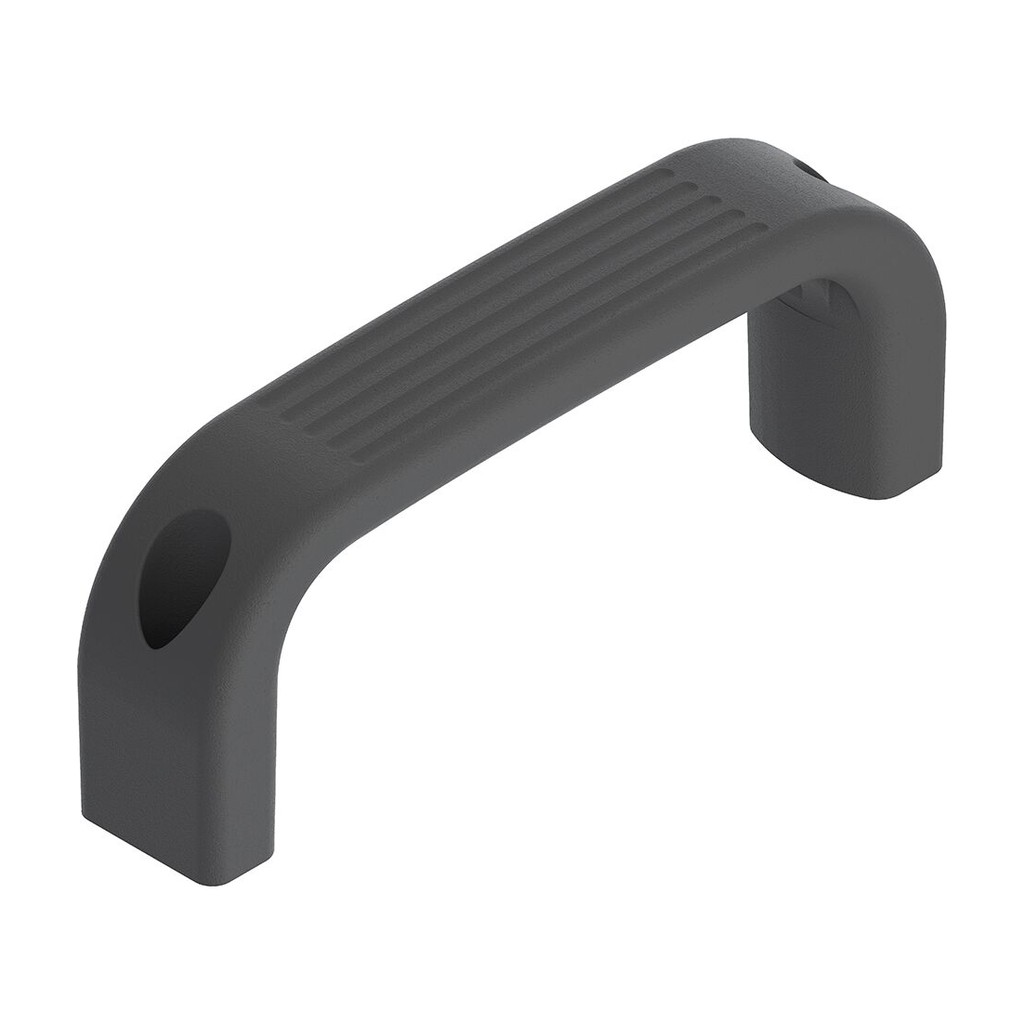
Fixed handles
Fixed in slot C8 or C10 with M6 nut and screw.

Magnetic latches
Keep guard doors and hatches closed.
For each accessory, choose the nut for the same slot as the profile.
The LeanProducts service
From parts list to ready-to-assemble kit, with a single point of contact:
Cutting to length
We cut the profiles in our workshop to the lengths in your parts list.
Check of codes and quantities
We start from your parts list or a sketch: we check brackets, nuts and screws for every slot and every joint.
Ready-to-assemble kits
You receive cut profiles and accessories grouped by structure, with the component list.
Spare parts
When you modify or extend the structure we supply the same original components.
Send us the parts list or a photo of the structure: we reply with codes and quantities.
Data and compatibility
| Property | Value |
|---|---|
| Slot | C6 (6 mm) · C8 (8 mm) · C10 (10 mm) |
| For profiles | C6: 20 series · C8: 30 series · C10: 40, 45, 50, 60, 80, 90 and 100 series |
| Material | Zinc-plated steel or stainless steel |
| Thread | C6: M4 · C8: M4, M5, M6 · C10: M4, M5, M6, M8 (zinc-plated and stainless) |
| Load capacity Fmax | C6: 1700 N · C8: 4000 N · C10: 6000 to 18000 N depending on the profile |
| Profile machining | Not required |
| Versions | 16 codes: 8 in zinc-plated steel and 8 in stainless steel |
Choose the variant above: data and code update in the Specifications tab. The load capacity is the static limit of the slot with the largest thread in the series.
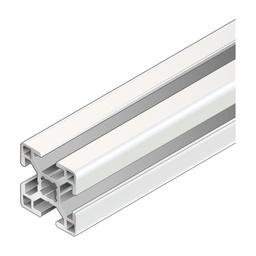
Need help with your profile parts list?
Send us a sketch or the parts list: we will give you codes, accessories and cut lengths.
Specifications
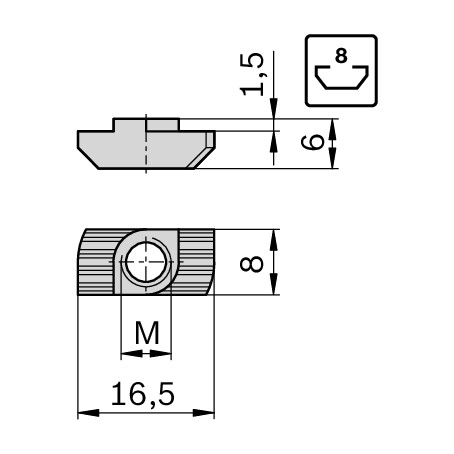
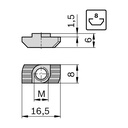
| Slot | C8 |
| ESD | yes |
| Surface treatment | Zinc plating |
| Load capacity Fmax N | 4000 |
| Tightening torque Nm | 25 |
| Production method | Moulding |
| Technical notes | Fmax 4000 N (with M6) |
| Length mm | 16.5 |
| Brand | Bosch Rexroth |
| Thread | M4 |
| Material | Zinc-plated steel |
| Tags | |
|---|---|
| Tags |
Bosch 5S1
Bosch 5SP
|
Per la cava C6 una vite a testa cilindrica ISO 4762 M4x12, per le cave C8 e C10 una M5x16 con rondella M5, sempre con un dado con testa a martello della cava del profilo.
It depends on the profile, because it is the slot that gives way: 7000 N in light profiles such as 40x40L, 45x45L and 80x80L, 12000 N in 45x45, 60x60, 45x90 and 90x90L, 18000 N in large profiles such as 90x90, 90x180 and 45x270. These are static limit values: apply your own safety factors.
La versione per cava C8 e C10 tiene con 40 N e comprende la controparte: viti, rondelle e dadi con testa a martello li ordini a parte. Quella per cava C6 tiene con 20 N, adatta a porte leggere dei profili serie 20, ed è completa di controparte, angolare e viti M3x8.
An M6 T-nut or an M6 swivel-in sliding block with spring for your profile's slot, C8 or C10.
Screw the M6 stud of the buffer into an M6 T-nut inserted in the profile slot, or fix it with an M6 nut where you have a through hole.
You screw it onto the profile from outside with M6 screws and M6 T-nuts in slot C10, even with the structure already assembled. Alternatively the frame is inserted into the slot of an aluminium profile or of the sliding door profile Al 45.
No, è in plastica e serve solo a mettere in asse il profilato di guida sulla cava. Il carico passa attraverso le viti M8 e i dadi con testa a martello.
The T-nut for slot C8: the cap adapts it to the C10 slot of the profile and insulates it.
The sliding block carries more but can only be inserted from the profile end, so you must plan it before assembling the frame. The T-nut goes in from the front at any point, even in a finished structure. Use the sliding block for the most heavily loaded joints, and the T-nut for accessories added later.
With the T-nut, the nut sits in the slot and the screw is driven in from the outside. With the flange nut it is the other way round: the T-bolt sits in the slot and the nut tightens from the outside, with a wide collar bearing on the accessory.
Choose the thread of the screw of the accessory you need to fix. In slot C10 M8 carries the most and is the bracket thread; M4 and M5 are for light accessories. In slot C8 the most widely used is M6, for example for handles and latches.
No: it is made for the square holes of the 19″ angle profile. To fix accessories in the slot, use a T-nut or a sliding block.
No, it is intended for light accessories such as cable ties and loops. For brackets, connectors and higher loads, use the T-nut or the steel sliding block.
When the distance between frame and leaf is not precise: the adjustable hinge compensates from 6 to 20 mm. To fix a leaf with a 10 mm slot you need M8 T-nuts.
It must be cut to length and drilled at the fixing points: the centring grooves of the profile act as a template for the holes. Then you fix it to the slot with M6 T-nuts and M6 countersunk screws.
The hinge profile, to be cut into two halves and drilled for fixing, M6 T-nuts and ISO 10642 screws: M6x12 in slot C8, M6x16 in slot C10.
Via its slot C10: T-nuts or C10 sliding blocks and screws, on the profiles forming the line frame. Send us a sketch of the line and we'll recommend profiles, accessories and cut lengths.
For machines and workstations in a dry environment, zinc-plated is fine. Choose stainless when the structure works outdoors, in damp environments, is washed frequently or is in a clean room: shape and load capacity are the same, and the available threads match.
With the screw, the thread protrudes from the slot: slide on the drilled part and lock it with a nut from the outside, handy for angles, brackets and plates. With the T-nut, the thread stays in the slot and you fasten the part with a screw from the outside.
The M8 screws are included. To fix the door on profiles with slot C10, add M8 T-nuts for slot C10.
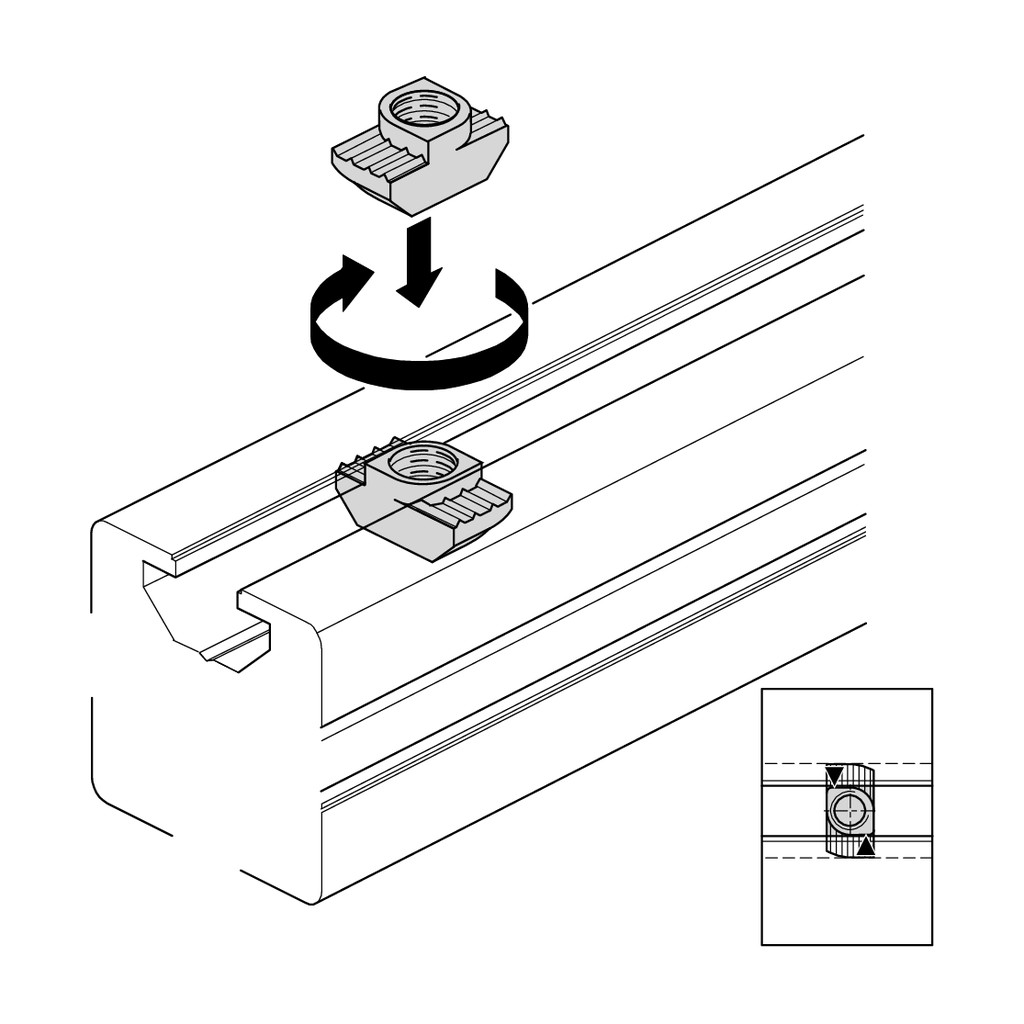
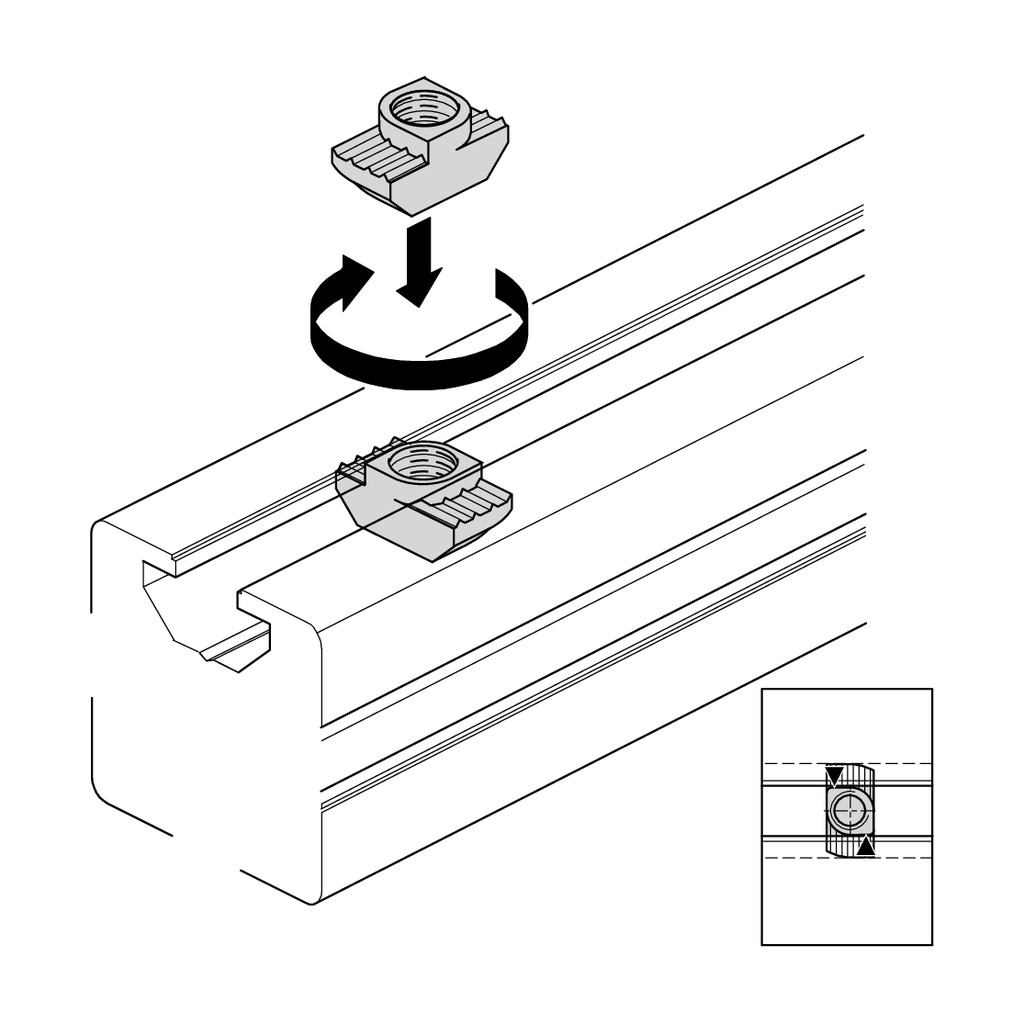
Slide the nut into the slot with the head aligned and screw in: the drag torque turns it until it stops against the walls. When you feel the screw start to pull, the nut is in position and you can tighten.
The screw must pass through the accessory and engage the full thread of the nut without touching the bottom of the slot. The zinc-plated M5, M6 and M8 versions work with standard screws. If in doubt, send us the accessory code: we will tell you the right screw.
The T-nut goes in from the front at any point and is the choice for most accessories. The standard sliding block holds more, for example 6000 N instead of 4000 N in slot C8, but it has to be slid in from the end of the profile before the frame is closed.
It is the width of the profile slot and determines which accessories you use. Slot C6 (6 mm) is for 20 series profiles, C8 (8 mm) for the 30 series, C10 (10 mm) for profiles from the 40 series upwards. Nuts, screws, brackets and cover caps are chosen by slot: each accessory's product page shows the right one.
Yes. You can order the full bar or the piece cut to the length you need: we do the cutting ourselves, in our workshop. Each profile's product page shows the maximum bar length and the minimum cut length.
Look at the moments of inertia Ix and Iy: the higher they are, the less the profile deflects under load. For the same section, “L” profiles are lightened and deflect a little more. For long spans or high loads move to a larger section or a tall profile (e.g. 45x90 instead of 45x45). If you send us drawing and loads, we will check the choice.
The T-nut is inserted from the front into the slot, even in an assembled structure, and positions itself when you tighten the screw: it is the standard choice for fixing accessories. The sliding block withstands higher forces, but normally has to be inserted from the profile end before closing the frame; spring versions stay where you put them.
The simplest way is the bracket, which joins two profiles at 90° with screws and nuts in the slot, without machining. For end, T, 45° or three-way connections there are dedicated connectors, some of which require profile machining as stated on their product page.
Yes, for several accessories (for example cover caps, hinges and nuts) there are conductive ESD versions, indicated in the name or variant. Tell us which EPA area you work in and we will confirm the components to use.
On each product page you will find the MGE catalogue pages to download as PDF, with dimensioned drawings and technical data; the Specifications tab shows the data for the variant you have chosen.
Yes. Send us the parts list or a sketch with dimensions: we give you codes, quantities and cut lengths and prepare the kit with profiles already cut and the accessories.