A milk run replaces forklift trips with a round on a fixed schedule: the tugger train passes the same stops, delivers full containers and collects empties. On paper it is simple. On the shop floor it almost always fails for one of these five reasons.
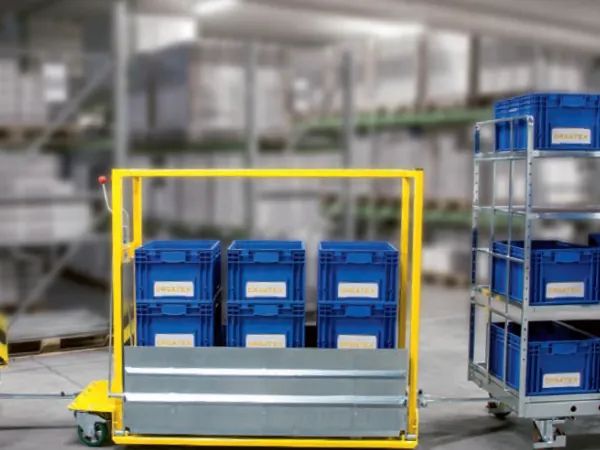
1 · The round starts “on call”
If the train leaves when someone phones, it is just a forklift with several trailers. A milk run works with a rhythm the line knows: same stops, same times. The mizusumashi, the operator who drives it, reads the kanban cards and reorders only what has been consumed.
For reorder signals
2 · Loading and unloading still need a forklift
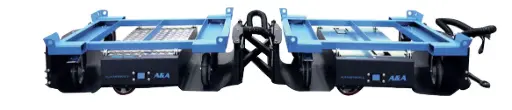
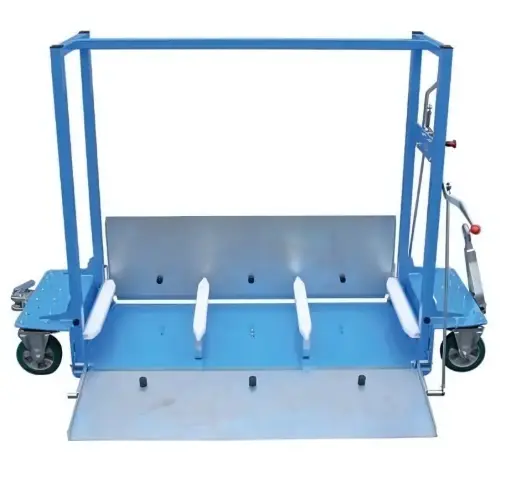
If at the line side the trolley has to be lifted with a forklift, the round stops at every stop. Trolleys must enter and leave the train without tools. LiftLiner® lifts the trolleys in the bay and sets them down on the floor: up to 8 trolleys per round, 1000 kg per bay, lifting in less than 3 seconds.
3 · The stops are not marked
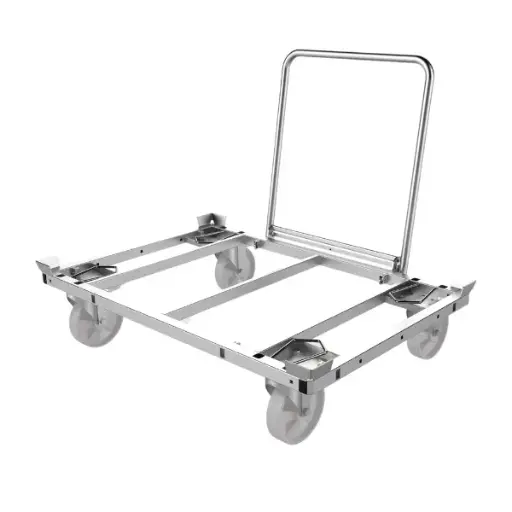
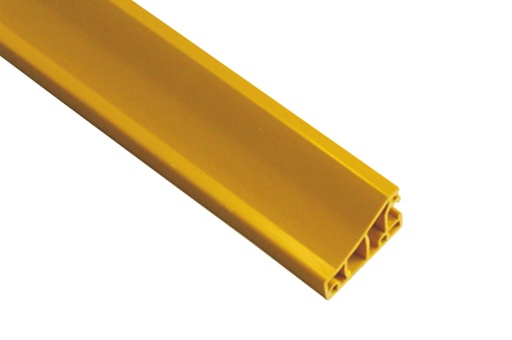
Trolleys parked crosswise, full and empty mixed up, picks that skip the order of arrival: the round slows down and the line does not know what to use first. Every load needs a fixed place. Park Stations hold the trolley wheels always in the same spot; FIFO rails guide the dollies from the loading side to the picking side.
4 · Empties do not return in the same round
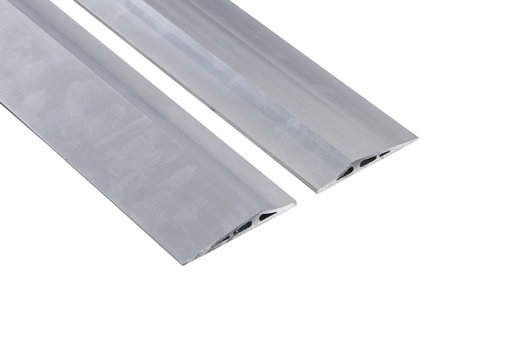
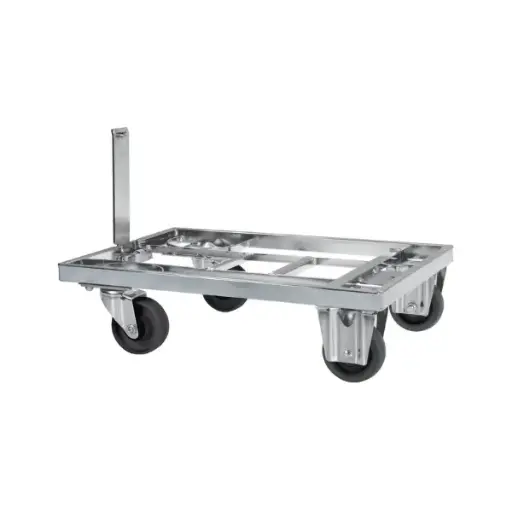
If empty containers stay on the line, at the next round there is no room for the full ones and the operator stacks them wherever he can. The train that delivers must also collect: dollies coupled in a convoy return to the supermarket with the empties, without transferring loads.
5 · The route changes every week
A round that changes every time cannot be standardised or measured. When stops, trolleys and times are stable, the milk run is improved with kaizen and can even become autonomous: an AMR does the round instead of the operator, who goes back to managing the kanban.
Frequently asked questions
What is a milk run in internal logistics?
It is a replenishment round on a fixed timetable: the tugger train always calls at the same stops, delivers full containers and collects the empties. It replaces single forklift trips.
Who is the mizusumashi?
The operator who drives the tugger train. On every round they read the kanbans and reorder only what has been consumed.
How many trolleys does a tugger train carry?
With LiftLiner® up to 8 trolleys per round, with 1000 kg per bay. The train lifts the trolleys in the bay and sets them down in under 3 seconds, with no forklift.
Can a milk run be automated?
Yes, once stops, trolleys and times are stable: an AMR can run the round instead of the operator, who goes back to managing the kanbans. The round has to be standard first.
Learn more
Milk run · Tugger train and milk run · Park Station · FIFO floor lanes · Autonomous logistics
Want to set up or review a milk run? Contact us: we start from the real stops and loads.